
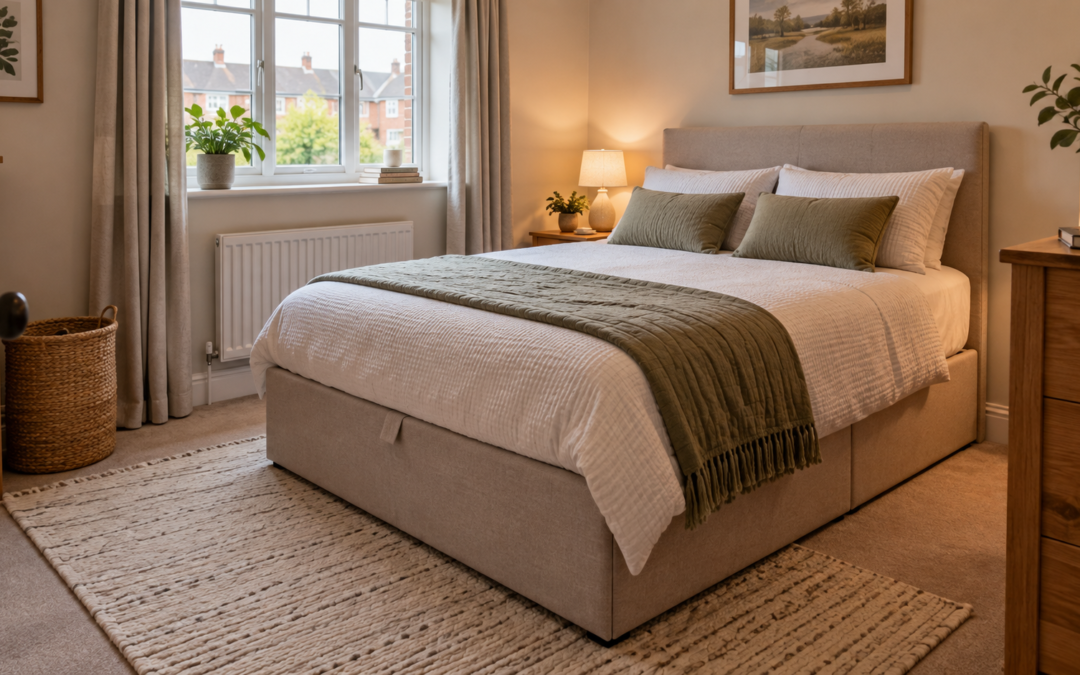
Choosing a comfortable bed is one thing. Choosing one that feels supportive and fits comfortably into a smaller bedroom can be a little trickier.
It’s a familiar problem in UK homes, from compact new-build bedrooms to traditional box rooms and smaller spare rooms. You want enough sleeping space to get comfortable, but you also need room to move around, open wardrobes and somehow find somewhere for all the bedding.
Quick Answer
For a small bedroom, start with the mattress and support you actually need, then choose a bed frame that uses the available space efficiently. Look for a stable, compatible base, measure the room carefully and consider built-in storage such as an ottoman or divan rather than adding more furniture.
After more than 50 years helping people choose beds and mattresses, we’d always recommend treating comfort and space as two parts of the same decision. A clever bed frame is useful, but it shouldn’t come at the expense of a mattress that feels comfortable and supportive for the way you sleep.
1. Start With the Mattress, Not the Bed Frame
If back support is important to you, it’s worth separating the jobs of the mattress and the bed frame.
Your mattress has the biggest influence on how your body feels when you lie down. It should support your body comfortably and allow you to settle into a natural sleeping position. The bed base then provides the stable foundation underneath it.
Don’t Assume Firmer Always Means Better
There isn’t one mattress firmness that’s right for every back or every sleeper. Your body weight, sleeping position and personal comfort all affect how firm a mattress feels. Choose something that feels supportive to you rather than automatically reaching for the firmest option available.
2. Measure the Whole Room, Not Just the Bed Space
A bed technically fitting into a room doesn’t necessarily mean the room will work once it’s there.
Before choosing beds for small bedrooms, measure the usable floor space and note anything that can’t move, including radiators, doors, wardrobes, alcoves and windows.
Our favourite trick: mark the dimensions of the bed on the floor with masking tape. Walk around it, open the wardrobe and bedroom door, and check whether the room still feels practical before you buy.
3. Don’t Automatically Downsize Your Mattress
When floor space is tight, choosing the smallest possible bed can feel like the obvious answer. But your sleeping space matters too.
If you’re regularly sharing the bed, squeezing onto a mattress that’s too small may leave you feeling cramped. Instead, look at whether a smarter bed base could allow you to keep the mattress size you find comfortable while reducing the need for other bedroom furniture.
For single sleepers, a small double can sometimes offer a useful middle ground between sleeping space and room footprint, provided the bedroom dimensions allow it.
4. Make the Space Under Your Bed Work Harder
In a smaller bedroom, the space underneath your mattress is some of the most valuable storage space you have.
Choosing a storage bed such as an ottoman can give you a large hidden compartment for spare bedding, towels, clothing and other bulky items without adding another chest of drawers to the room.
| Storage Type | Best For |
|---|---|
| Ottoman Bed | Rooms where there isn’t enough clearance for drawers to pull out. |
| Divan With Drawers | Bedrooms with enough side clearance and items you want to access regularly. |
| Bed Frame With Under-Bed Space | Flexible storage using boxes or bags that can slide underneath. |
5. Choose the Storage You’ll Actually Use
Space-saving beds only work if the storage suits your everyday life.
An ottoman can be brilliant for spare duvets, suitcases and seasonal clothes, but opening the whole mattress platform every morning may not be ideal for things you use daily. Drawers can be quicker to access, but you need enough clear floor space for them to open.
Think about access as well as capacity. The bed with the most storage isn’t necessarily the most practical bed for your room.
6. Make Sure the Mattress and Bed Base Work Together
This is easy to overlook when you’re concentrating on bedroom dimensions, but your mattress and bed base need to be compatible.
Different mattresses can have different requirements when it comes to slat spacing, ventilation and the type of base underneath them. An ottoman mechanism may also have mattress weight guidance that needs to be followed.
Always check the manufacturer’s instructions for both the mattress and bed before pairing them together. A supportive mattress still needs the right foundation underneath it.
7. Be Careful With the Word “Orthopaedic”
You’ll often see the word orthopaedic when shopping for back support beds, but it shouldn’t be treated as a guarantee that a particular mattress will improve back pain.
What feels supportive varies from person to person. Rather than shopping by label alone, look at the mattress construction, comfort rating and how well it supports your body in your usual sleeping position.
If You Already Have Back Pain
A new bed can help you create a more comfortable sleep setup, but persistent or worsening back pain should be discussed with an appropriate healthcare professional rather than relying on a mattress to treat the underlying problem.
The Best Bed for a Small Bedroom Is the One That Gets Both Jobs Right
When you’re choosing beds for UK homes where space is limited, you shouldn’t have to decide between comfort and practicality. Start with the sleeping surface that feels supportive to you, then choose a bed frame that makes intelligent use of the room around it.
Measure carefully, make use of under-bed storage and don’t let terms such as “orthopaedic” or “extra firm” make the decision for you. A good bed should suit your body, your bedroom and the way you actually live.
What Should You Avoid When Choosing a Bed for Back Pain?
When your back is uncomfortable, it can be tempting to look for the firmest mattress or anything labelled “orthopaedic”. But neither automatically makes a bed better for your back.
Don’t Assume Firmer Is Better
A mattress that is too firm can create pressure around the shoulders and hips, while one that is too soft may not feel supportive enough. The right feel depends on your body, sleeping position and comfort preferences.
Don’t Buy on the Word “Orthopaedic” Alone
“Orthopaedic” is often used to describe mattresses designed with support in mind, but it is not a guarantee that a particular mattress will relieve back pain or suit your body.
Don’t Sacrifice Comfort for Storage
Storage is useful in a small bedroom, but the bed still needs to work well with your mattress and feel comfortable enough for everyday sleep.
Don’t Forget the Space Around the Bed
A bed can technically fit into a room and still be awkward to live with. Leave enough space to walk around it, open doors and access storage without having to rearrange the room.
Frequently Asked Questions
What type of bed is best for back pain?
There is no single bed type that is best for everyone with back pain. The most important thing is choosing a supportive mattress and bed base that work well together and suit your sleeping position, body shape and comfort preferences.
Is a firm mattress better for back pain?
Not necessarily. A mattress that is too firm can feel uncomfortable around pressure points, while one that is too soft may not feel supportive enough. The right firmness varies from person to person.
Are ottoman beds good for small bedrooms?
Yes, they can be a very practical choice because the storage sits underneath the mattress rather than taking up extra floor space. Just make sure there is enough room to open the bed comfortably.
Is a divan bed good for a small bedroom?
Divan beds can work well in smaller rooms because they tend to have a compact footprint, and many are available with built-in drawers. They can be especially useful if you want storage without a larger decorative frame.
What size bed is best for a small bedroom?
The best size is the largest bed that still leaves enough room to move around comfortably and use doors, drawers and wardrobes. Always measure the full external dimensions of the bed frame, not just the mattress size.
Does the bed frame matter for back support?
Yes. The bed base can influence how a mattress feels and performs, so it is important to make sure the frame and mattress are compatible. A supportive mattress on an unsuitable base may not feel or perform as intended.

Written by
Alice Littler
Alice brings a background in marketing, design and branding to Land of Beds, where she focuses on making sleep advice simple, relatable and practical for everyday life.
She holds a degree in Graphic Design with a specialism in branding and design, giving her a strong understanding of how interior spaces, colour, layout and environment can influence comfort, mood and overall wellbeing.
Her creative background allows her to combine expert bed and mattress guidance with bedroom design inspiration, helping customers create spaces that feel as good as they look.
Alice has worked with internationally recognised lifestyle brands including Campari and Aperol, Paulaner and Malfy, building her expertise in consumer-focused communication and lifestyle content.
She has also been trained by and works closely with leading UK bed and mattress manufacturers including Harrison Spinks, Hypnos and Vispring, developing extensive knowledge of mattress technology, sleep ergonomics, bedroom comfort and sleep wellness.
Passionate about the life-changing impact of quality sleep, Alice creates content designed to help readers make informed decisions about their sleep environment, wellbeing and everyday routine.