Memory foam is one of the most recognised mattress materials on the market. It’s been around for decades, it’s widely recommended, and it’s often the first option people consider when they’re looking for better comfort or support.
And yet, for something so familiar, it’s surprisingly misunderstood.
Most people buying a memory foam mattress for the first time don’t fully know what it’s doing once they lie down, why it feels the way it does, or whether it’s actually the right fit for their body, their sleep position, and how they tend to sleep through the night.
So rather than repeating the usual selling points, this guide focuses on what matters.
What memory foam is, how it responds to your body, where it performs exceptionally well, where it can fall short, and who it’s genuinely suited to. We’ll also point you towards specific memory foam mattresses from our range at Land of Beds, based on how different people actually sleep.
Clear, practical, and grounded in real experience.
“Memory foam’s ability to conform to individual body contours makes it particularly effective at reducing localised pressure. This type of concentrated load can disrupt circulation and trigger repositioning during sleep. For those who wake frequently or experience joint discomfort, a well-made memory foam mattress can make a clinically meaningful difference to both sleep quality and morning comfort.”
Dr Katrina O’Donnell
Retired GP, 30+ years NHS experience. Medical reviewer, Land of Beds
What is memory foam and how does it work in a mattress?
The name is slightly misleading. Memory foam does not have a memory in the way we usually think of one. What it does have is a very specific way of responding to your body.
Memory foam, technically known as viscoelastic polyurethane foam, was originally developed by NASA in the 1960s for aircraft cushioning. It became widely used in mattresses in the early 1990s, where it was first described as slow spring back foam. In many ways, that earlier name is a more accurate reflection of how it behaves.
So what actually happens when you lie on it?
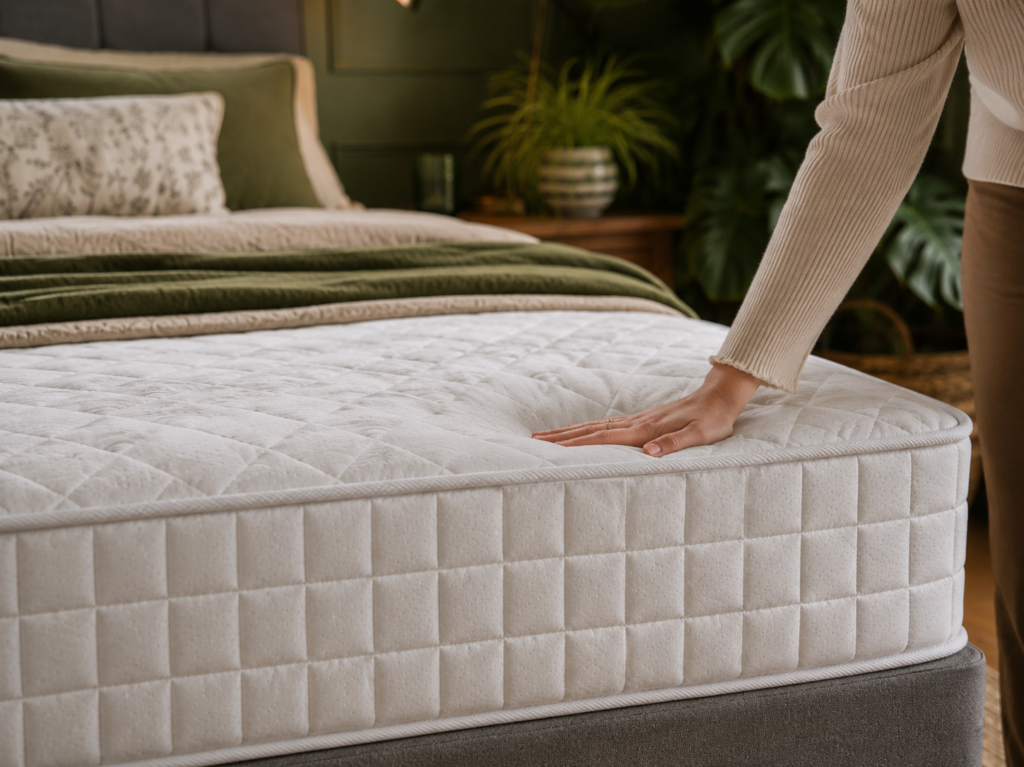
Memory foam responds to two things at the same time: heat and pressure. As your body makes contact with the surface, your body heat softens the foam at those pressure points. As it softens, it begins to mould to your exact shape. Not a generic outline of a person, but the specific position your body is in at that moment, including the curve of your spine and the weight distribution through your shoulders and hips.
When you move or get out of bed, the heat dissipates and the foam gradually returns to its original shape. The next time you lie down, the process starts again.
The practical result is a much more even distribution of body weight across the sleeping surface. Instead of pressure building at the hips and shoulders, it is spread more evenly across the body. That is what gives memory foam its reputation for pressure relief, and why it is so often recommended for side sleepers, where those areas naturally carry more load.
The viscoelastic explained
“Viscous” means the material deforms gradually under pressure rather than immediately. “Elastic” means it returns to its original shape once that pressure is removed. The combination of these two properties is what gives memory foam its characteristic slow sink and gradual recovery, and what sets it apart from other mattress materials.
Memory foam mattresses: pros and cons
Memory foam is genuinely excellent at some things and genuinely not right for others. Here’s the honest version of both.
The pros
Excellent pressure relief. Memory foam distributes body weight evenly, reducing strain on the hips, shoulders, and joints.
Strong motion isolation. Movement is absorbed rather than transferred, which helps reduce disturbance between partners.
Supports spinal alignment. The foam moulds to your natural sleeping position and helps maintain the curve of the spine.
Hypoallergenic properties. Dense foam makes it more difficult for dust mites to settle, which can benefit allergy sufferers.
Completely silent. With no springs, there is no noise or movement from the mattress itself.
Available across a wide range of price points, from entry-level options to premium designs.
The cons
Heat retention. Standard memory foam responds to body heat, which can lead to a warmer sleep surface. Modern gel-infused and open cell designs help reduce this.
Slower response. The material takes time to adjust when you move, which can make repositioning feel less immediate.
Initial off-gassing. Some mattresses may have a noticeable smell when first unpacked. This usually fades within a few days.
Not ideal for heavier sleepers if the tension is too soft. Excess compression can affect spinal alignment.
Edge support can be weaker without reinforced edges, which may reduce stability when sitting or sleeping near the sides.
Who should choose a memory foam mattress?
Side sleepers
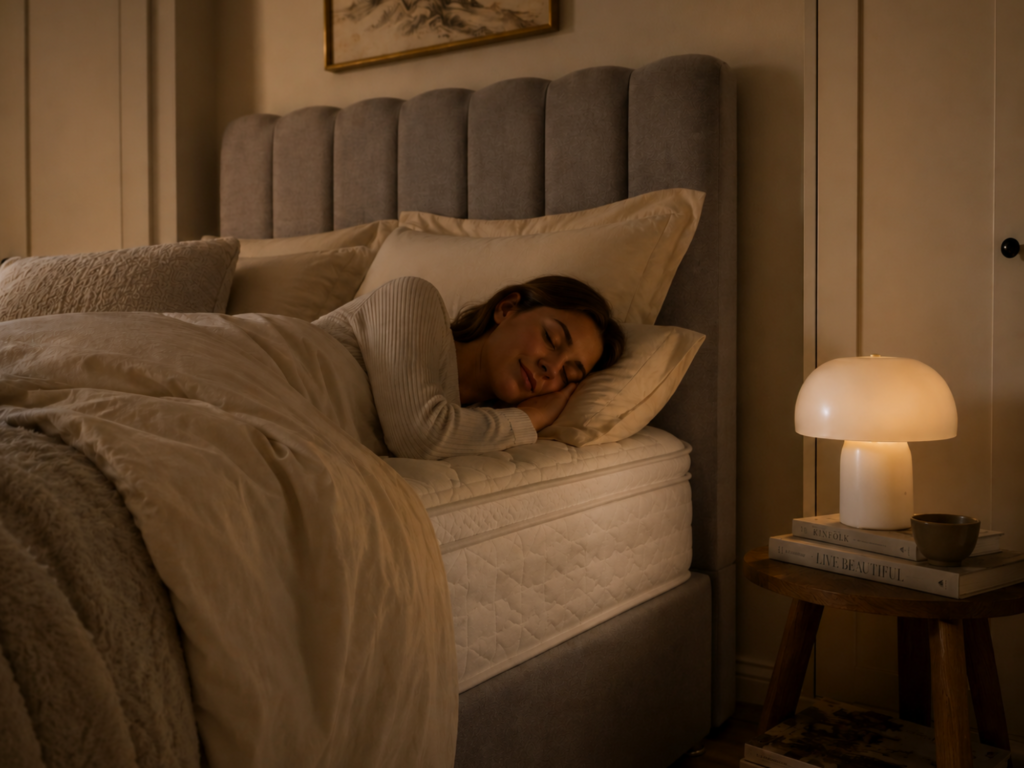
This is where memory foam performs most consistently well. Sleeping on your side creates pressure at the shoulders and hips, and memory foam helps absorb that pressure rather than allowing it to build. If you regularly wake with a numb arm or sore shoulder, it is often a sign that the mattress is not distributing weight effectively. Memory foam can make a noticeable difference here.
Those with joint pain
The even weight distribution of memory foam is particularly beneficial for those dealing with arthritis, hip discomfort, or general joint pain. By reducing pressure at key contact points, the mattress allows the muscles around those joints to relax more fully during sleep.
Couples with restless partners
Memory foam is one of the most effective materials for motion isolation. Movement is absorbed rather than transferred across the surface, so one partner turning during the night is far less likely to disturb the other. If you share a bed with a restless sleeper and often wake feeling unsettled, this can be a significant factor.
Allergy sufferers
The dense structure of memory foam makes it more resistant to dust mites than many traditional spring mattresses. Many designs also include hypoallergenic or anti-bacterial covers, making them a consistently strong choice for those with allergies or sensitivities.
Light to average weight sleepers
Memory foam performs best when it compresses enough to engage the support layers beneath. For sleepers under roughly 90kg, most memory foam mattresses will respond as intended. Heavier sleepers may find softer options compress too much and may be better suited to a firmer tension or a hybrid construction.
Who should avoid a memory foam mattress?
Memory foam is great for some people, but it’s not right for everyone, and we’d rather tell you that now than have you buy the wrong thing.
Hot sleepers
Standard memory foam can retain heat. If you already tend to sleep warm, it is worth looking specifically for gel-infused or graphite-infused versions that are designed to improve airflow and draw heat away from the body. Mattresses without any cooling technology are less suitable if temperature regulation is your main priority.
Combination sleepers who move frequently
The slower response of memory foam, which is part of what makes it effective for pressure relief, can make it slightly harder to change position during the night. If you move regularly between your back, side, and front, a more responsive material such as latex or a hybrid construction may feel easier to move on.
Heavier sleepers
At higher body weights, softer memory foam can compress more deeply, which may affect overall support and alignment. Firmer memory foam options, higher-density designs, or hybrid mattresses with a supportive spring base are often a more suitable choice.
Those who prefer natural materials
Memory foam is a synthetic material. If you prefer natural fillings such as wool, cotton, cashmere, or latex, you may be better suited to a latex mattress, a pocket sprung mattress with natural fillings, or a hybrid design that incorporates these materials.
Memory foam vs hybrid: which should you choose?
If you’re choosing between memory foam and hybrid, this is what actually matters.
Memory foam
Hybrid (springs + foam)
Pressure relief
Excellent
Excellent
Motion isolation
Best in class
Very good
Temperature
Can retain heat
Better airflow through spring core
Responsiveness
Slower response
More responsive, easier to reposition
Edge support
Variable
Generally stronger
Heavier sleepers
Firmer options recommended
Generally more suitable
Best for
Side sleepers, joint pain, very restless sleepers
Most sleepers, couples, warmer sleepers
If you’re genuinely unsure which direction to take, a hybrid is often the most balanced starting point. It reduces many of the common trade-offs by combining support, airflow, and pressure relief in one design.
That said, if your priority is motion isolation or targeted pressure relief, memory foam remains the stronger option. In those areas, it still performs more consistently than any other mattress type.
Graphite memory foam with pocket spring support. Designed for pressure relief with improved temperature regulation.
The Viva Supreme is a hybrid memory foam mattress that balances pressure relief with airflow and support. It combines individually wrapped pocket springs with graphite-infused memory foam, which is designed to help disperse heat more effectively than standard foam. The open cell structure allows air and moisture to pass through more easily, creating a more comfortable sleeping environment for those who are concerned about warmth.
The spring layer works independently to support posture and alignment, while reflex foam beneath adds an extra level of stability. Foam encapsulated edges provide a consistent sleeping surface across the full width of the mattress. The 100 night trial also gives you time to properly assess whether it suits how you sleep at home.
Which? verdict
We were so impressed by this mattress we made it a Best Buy. This is a supportive mattress that will stand the test of time.
Springs
2030 pocket springs with independent support for posture and alignment
Foam
Graphite memory foam with an open cell structure to help disperse heat
Trial
100 night trial with a made in the UK construction
Sealy Memory Deluxe Ortho Mattress
Orthopaedic support with pressure-relieving memory foam. Designed for a firmer, more stable feel.
The Sealy Memory Deluxe Ortho is designed with support as the priority. It combines Sealy’s orthopaedic spring system with a layer of memory foam to provide pressure relief without compromising on structure. This creates a firmer sleeping surface that helps maintain spinal alignment, particularly for back and front sleepers.
The memory foam layer works to reduce pressure at key contact points, while the spring system provides consistent, deep support across the body. This balance makes it a practical option for those who want some contouring comfort but still prefer a more supportive, stable feel overall.
Why this stands out
A well-balanced orthopaedic design that combines firmer support with targeted pressure relief, making it a strong choice for those who need structure without losing comfort.
Support system
Sealy orthopaedic spring unit designed for full body support and alignment
Comfort layer
Memory foam layer to help reduce pressure at the hips and shoulders
Feel
Firmer tension with a stable, supportive surface
Relyon Tarporley Mattress
Pocket sprung support with natural comfort fillings. A more traditional approach to comfort and breathability.
The Relyon Tarporley is built around a pocket sprung core with natural fillings, offering a more traditional alternative to foam-based designs. Each spring responds independently to the body, providing tailored support while maintaining good airflow through the mattress.
The use of natural fibres helps regulate temperature and wick away moisture, creating a more breathable sleeping surface. This makes it a good option for those who prefer a fresher feel and want to avoid the heat retention sometimes associated with foam.
Why this stands out
A well-balanced pocket sprung mattress that combines responsive support with the comfort and breathability of natural materials.
Support system
Pocket springs that respond independently for tailored support
Fillings
Natural comfort layers designed to improve airflow and moisture control
Feel
Supportive and responsive with a more traditional mattress feel
Sealy Davenport Mattress
Exclusive to Land of Beds, combining advanced orthopaedic support with luxurious comfort.
The Sealy Davenport has been designed to deliver exceptional comfort without compromising on support. At its core is Sealy’s PostureTech Core Support spring system, working alongside 1,400 mini pocket springs to provide targeted support that responds to your body’s natural movements throughout the night.
Premium MemorySense® Foam gently cushions pressure points while a deep Eurotop adds a plush, luxurious feel. SmarTex® fibres help regulate temperature, making the Davenport an excellent choice for sleepers looking for both comfort and dependable support.
Why this stands out
Exclusive to Land of Beds, the Davenport combines Sealy’s renowned PostureTech support with mini pocket springs and premium comfort layers, creating a mattress that’s supportive, pressure relieving and exceptionally comfortable.
Support system
PostureTech Core Support springs with 1,400 responsive mini pocket springs.
Comfort
MemorySense® Foam, deep Eurotop cushioning and cooling SmarTex® fibres.
Ideal for
Medium comfort, ideal for front, back and side sleepers seeking balanced support.
Memory foam mattress toppers: a flexible alternative
If you’re curious about memory foam but not ready to commit to a new mattress, a memory foam mattress topper is a sensible place to start. Placed on top of your existing mattress, a topper gives you the pressure-relieving, contouring qualities of memory foam without the need for a full replacement.
They are available in a range of depths and tensions, and many designs include breathable or moisture-wicking covers such as CoolMax to help with temperature regulation. A topper can make a noticeable difference if your current mattress is broadly right but feels slightly too firm. It will not change the underlying support of the mattress, but it can significantly improve surface comfort.
At Land of Beds, we stock a wide range of memory foam toppers, including options like the Dormeo Octaspring Body Zone Topper, which uses a more structured foam design to improve airflow and support across different areas of the body.
If you’re comparing options, you can browse our full range of memory foam mattress toppers here to see the different depths, materials, and constructions available.
As a guide, a memory foam topper will typically last between three and five years, depending on how often it is used and the density of the foam.
Topper tip
A mattress topper should sit directly on top of your mattress, with a mattress protector placed over both. This helps keep everything hygienic and can extend the life of the topper.
It’s worth noting that a topper will not correct deeper issues with the mattress itself. If your mattress has visible sagging or lacks proper support, a topper is unlikely to resolve this. Where it works best is improving surface comfort, particularly if a mattress feels slightly too firm.
How long does a memory foam mattress last?
A quality memory foam mattress typically lasts between seven and ten years. This depends on factors such as foam density, body weight, and how regularly the mattress is rotated. Higher density foams generally retain their structure and support for longer.
Can I use a memory foam mattress on any bed frame?
Most memory foam mattresses work well on slatted bases, provided the slats are no more than 7 to 8 cm apart to ensure even support. Solid platform bases are also suitable. If you have an adjustable bed, you will need a mattress designed to flex with it, so it is always worth checking compatibility before buying.
Is memory foam good for back pain?
It can be, particularly for pain caused by pressure at the hips and shoulders or for side sleepers who need more cushioning. However, it is not automatically the right solution for all back pain. If the mattress is too soft for your body weight, it can allow the spine to sink out of alignment. For ongoing or severe back pain, it is worth seeking professional advice before choosing a mattress.
Do memory foam mattresses sleep hot?
Standard memory foam can retain heat because it contours closely to the body. Modern designs often include gel-infused or open cell foam to improve airflow and reduce heat build-up. If temperature regulation is important to you, these are worth considering.
What size memory foam mattress do I need?
Memory foam mattresses are available in all standard UK sizes, from small single through to super king. The right size will depend on your room space, bed frame, and how much space you prefer when sleeping. It is always worth measuring carefully before ordering.
What is the difference between memory foam and gel memory foam?
Gel memory foam is a variation of standard memory foam that includes cooling gel within the material. Both provide pressure relief and contouring support, but gel versions are designed to help regulate temperature by drawing heat away from the body more effectively.
Need help choosing?
Memory foam mattresses come in more variations than the name suggests. From pure foam to gel or graphite-infused designs, as well as hybrid constructions, tensions, and finishes, there is a wide range to choose from.
If you are unsure which direction to take, our team at Land of Beds can help you work through the options based on your body, sleeping position, and budget. The advice is straightforward and there is no pressure to buy.
Call us on 01928 242829, visit our showrooms in Greater Manchester and Cheshire, or browse our full range online.
Browse memory foam mattresses
Explore gel-infused, graphite-infused, hybrid, and traditional memory foam mattresses across all tensions and UK sizes.
Alice brings a background in marketing, design, and branding to Land of Beds, where she focuses on making sleep advice simple, relatable, and practical for everyday life. She holds a degree in Graphic Design with a specialism in branding and design, giving her a strong understanding of how interior spaces, colour, layout, and environment can influence comfort, mood, and overall wellbeing.
Her creative background allows her to provide both expert bed and mattress guidance and bedroom design inspiration that helps customers create spaces that feel as good as they look.
Alongside her work in marketing and branding, Alice has collaborated with internationally recognised brands including Campari and Aperol, Paulaner, and Malfy, helping develop her expertise in consumer-focused communication and lifestyle content. She has also been trained by and works closely with leading UK bed and mattress manufacturers including Harrison Spinks, Hypnos, and Vispring, building extensive knowledge of mattress technology, sleep ergonomics, bedroom comfort, and sleep wellness.
Passionate about the life-changing impact of quality sleep, Alice creates content designed to help readers make informed decisions to improve their sleep environment, wellbeing, and everyday routine.