
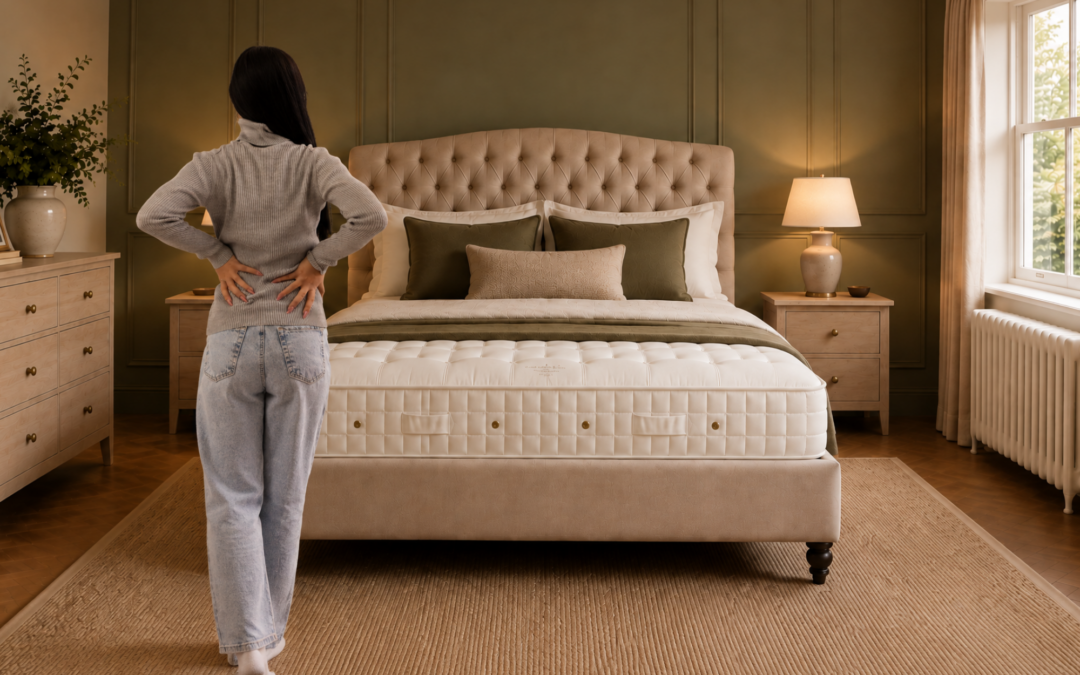
If your back is complaining every morning, it is very easy to blame the mattress. And if someone has ever told you that a firm mattress is best for a bad back, you might naturally assume that the firmer the better.
Except that is not quite what the evidence says.
The idea that a very firm mattress is automatically better for your back has been around for years. But choosing a mattress is not really about finding the hardest surface you can tolerate. It is about finding the right balance of support, pressure relief and comfort for your body and the way you sleep.
So, if you are wondering whether you should be looking for a firm, medium firm or something softer, let us clear up the confusion.
Quick answer: is a firm mattress best for a bad back?
Not necessarily. Research suggests that a medium-firm mattress can be a better option than a very firm mattress for adults with chronic, non-specific lower back pain. However, there is no single mattress firmness that is right for everyone.
Your sleeping position, body weight, mattress construction and personal comfort all matter. The aim is to find a mattress that supports your body without creating unnecessary pressure.
A note about back pain
This guide is about choosing a comfortable and supportive mattress. A mattress is not a treatment for back pain, and back pain can have many different causes. If your pain is persistent, severe, getting worse or worrying you, speak to your GP or another qualified healthcare professional.
Why do we think a firm mattress is better for a bad back?
Somewhere along the way, firm became almost synonymous with supportive.
It is an understandable assumption. If a mattress feels solid underneath you, surely it must be doing a better job of holding your body up?
Not necessarily.
A mattress is not simply there to stop you sinking. Your shoulders, hips, waist and lower back all interact with the mattress differently, depending on your sleeping position and body shape.
A mattress that is too soft for you may allow your heavier areas to sink too deeply. But a mattress that is too firm can also be uncomfortable if your body does not sink enough into the comfort layers.
This is particularly relevant for side sleepers, whose shoulders and hips are more prominent contact points with the mattress. If the surface does not provide enough cushioning, those areas can experience more pressure.
The important distinction: firmness is not the same as support
A firm mattress is not automatically more supportive, just as a softer mattress is not automatically less supportive. Support is about how well the mattress works with your body, distributes your weight and helps maintain a comfortable sleeping position.
What does the research actually say?
This is where things get interesting, because the popular advice to “go firm” is not strongly supported by the best-known research.
One of the most frequently cited studies was published in The Lancet in 2003. Researchers studied 313 adults with chronic, non-specific lower back pain and compared firm mattresses with medium-firm mattresses over 90 days.
The medium-firm group had better outcomes for pain while lying in bed and disability than the firm mattress group. The study concluded that a medium-firm mattress improved pain and disability in adults with chronic, non-specific lower back pain.
It is worth being precise here. This does not mean that every person with back pain should buy a medium-firm mattress. The study looked at a specific group of adults with chronic, non-specific lower back pain and compared two particular levels of mattress firmness.
More recent reviews have also generally pointed towards medium-firm mattresses as a useful starting point for adults with non-specific lower back pain, although the research is not strong enough to say that one firmness works for absolutely everyone.
2003
A randomised trial of 313 adults found medium-firm mattresses produced better outcomes than firm mattresses for chronic, non-specific lower back pain.
Literature reviews
Reviews of mattress research have generally found medium-firm surfaces to be a sensible option for comfort, sleep quality and support.
The bigger picture
There is no universal firmness that suits everyone. Body weight, sleeping position, construction and personal comfort all influence how a mattress feels.
The evidence above is based on published research and reviews listed in the sources at the end of this guide.
Our medical expert says firmness alone is not the answer
We have also asked Dr Katrina O’Donnell, retired GP with more than 30 years of NHS experience, to contribute to our wider advice on mattresses and back pain.
Dr Katrina O’Donnell
“Firmness alone is not the answer. Spinal alignment, pressure distribution, and appropriate support for the individual’s weight and sleeping position are what matter.”
Retired GP, 30+ years NHS experience
That is a useful way of looking at the whole question. Rather than asking, “What is the firmest mattress I can buy?”, it is more helpful to ask, “What level of support and cushioning does my body need?”
This is also why the same mattress can feel completely different to two people. A mattress that feels beautifully supportive to one person might feel too hard, too soft or simply uncomfortable to somebody else.
So, what mattress firmness is best for back pain?
There is no one-size-fits-all answer, but medium to medium-firm is a sensible starting point for many adults, particularly if you are unsure where to begin.
From there, your sleeping position and body weight can help narrow things down.
| Sleeping position | A useful starting point | Why it may work |
|---|---|---|
| Side sleeper | Soft to medium | More cushioning can help accommodate the shoulders and hips. |
| Back sleeper | Medium to medium-firm | A balanced feel can provide support without excessive sink. |
| Front sleeper | Medium-firm to firm | A more supportive surface can help limit excessive sinking around the hips. |
| Combination sleeper | Medium to medium-firm | A balanced feel can work across several sleeping positions. |
These are starting points rather than medical recommendations. Your body weight, build, personal comfort and the construction of the mattress all affect how a particular firmness feels.
Is a firm mattress good for back sleepers?
It can be, particularly if you prefer a firmer feel or tend to sink too far into softer mattresses. Back sleepers distribute their weight over a relatively broad area, and some people find that a medium-firm or firm mattress gives them the structure they prefer.
But “firm” is not automatically better. A mattress still needs enough comfort on the surface to avoid creating unnecessary pressure, particularly around areas where your body makes greater contact with the mattress.
If you sleep on your back and regularly wake feeling uncomfortable, it is worth considering whether the mattress is actually supporting you properly rather than simply assuming you need something harder.
Is a firm mattress good for front sleepers?
Front sleepers often prefer a firmer surface because it can reduce how deeply the hips sink into the mattress. A very soft mattress may allow the middle of the body to sink further than feels comfortable.
That does not mean every front sleeper needs an extra-firm mattress. Medium-firm may be enough for some people, particularly when the mattress has a supportive spring system underneath comfortable surface layers.
Is a firm mattress good for side sleepers?
This is where choosing the firmest mattress possible can easily backfire.
When you sleep on your side, your shoulder and hip sit lower than the rest of your body. A mattress needs enough give around those areas to accommodate your shape while still supporting your waist and the rest of your body.
If a mattress is too firm for you, you may feel pressure around the shoulders and hips or find yourself constantly changing position to get comfortable.
Side sleepers therefore often prefer softer to medium feels, although body weight and personal preference make a difference.
A useful rule of thumb
If you sleep on your side, do not choose a mattress simply because somebody has told you that “firm is better for your back”. Pay close attention to how your shoulders and hips feel on the mattress too.
How does body weight affect mattress firmness?
Body weight changes how deeply you sink into a mattress, which means the same mattress can feel firmer to one person and softer to another.
A lighter sleeper may not compress a firm mattress very much, which can make the surface feel harder and provide less opportunity for the comfort layers to contour around the body. A heavier sleeper may sink further into the same mattress and therefore need more resistance from the support system.
This is why firmness should never be treated as a simple quality scale. A 5/6 firm mattress is not “better” than a 3/6 medium mattress. They are simply designed to create different feels and levels of resistance.
Our mattress firmness guide explains the Land of Beds 1/6 to 6/6 firmness scale in more detail.
Firmness is only part of the story
Two mattresses can have the same firmness rating and feel completely different.
That is because the firmness label does not tell you everything about the mattress. The spring system, comfort layers, materials, edge support and overall construction all contribute to how it feels when you lie down.
A mattress can therefore feel firm on the surface while still using comfort layers to provide some cushioning. Equally, a softer-feeling mattress can have a supportive core underneath.
This is one reason it is useful to look beyond words such as “firm” or “orthopaedic” and understand what is actually inside the mattress.
What does this look like in real mattresses?
Looking at real mattresses makes the difference between firmness and support much easier to understand. At Land of Beds, we work with manufacturers including Sealy, Hypnos, Harrison Spinks and Sleepeezee, and their ranges demonstrate just how different support can be built.
Sealy Posturepedic
Sealy Posturepedic is a useful example because the range includes different tensions, from softer through to extra firm. Its AlignSupport spring technology is designed to respond to body shape, size and sleeping position, rather than relying on firmness alone.
That is the important point: support can come from the construction of the mattress as well as the firmness of the surface.
Hypnos
Hypnos offers mattresses across a range of tensions, including medium, medium firm, firm and extra firm. Its pocket spring systems and natural fibre comfort layers show how a supportive mattress can combine structure with cushioning.
For example, the Hypnos Capella Deluxe is a medium firm mattress designed for back, front and combination sleepers.
Harrison Spinks
The Harrison Spinks Ortho Deluxe is a genuine firm mattress, rated 5/6 on the Land of Beds firmness scale. It combines HD and Advanced Cortec pocket spring systems with natural fillings including British wool, cotton, hemp and flax.
It is designed with back and front sleepers in mind, while side sleepers who need more cushioning may prefer a softer option.
Sleepeezee
The Sleepeezee Ortho Elite demonstrates another approach. It combines a 1200 pocket spring system with a memory foam comfort layer and deep fibre fill, giving it a medium firm feel rather than an ultra-firm surface.
It is designed for people looking for a balance of support and pressure relief.
Mattress specifications and firmness ratings can vary between models and manufacturers. Always check the individual mattress details before making a decision.
Is an orthopaedic mattress better for a bad back?
Not automatically.
The word “orthopaedic” can make a mattress sound as though it has been medically approved or that it will solve a particular back problem. That is not how you should approach the label.
“Orthopaedic” is not a regulated mattress term in the UK, so it is much more useful to look at the actual construction, firmness, support system and comfort layers.
Some orthopaedic mattresses are deliberately firm or extra firm and can be a good match for people who prefer that feel, particularly some back and front sleepers. But a firmer orthopaedic mattress is not automatically the right choice for every person with back pain.
If you are interested in this category, our orthopaedic mattress collection is a useful place to compare different constructions and tensions.
How do you know if your mattress is too firm?
Sometimes the answer is simply how you feel on it.
A mattress may be too firm for you if you regularly notice:
- Pressure around your shoulders or hips, particularly if you sleep on your side.
- A hard, uncomfortable feeling rather than a supported one.
- A tendency to keep changing position during the night to get comfortable.
- A feeling that you are lying on top of the mattress rather than being comfortably supported by it.
- Persistent discomfort that you did not experience on a more suitable sleep surface.
None of these signs proves that the mattress is causing your back pain, but they are useful clues when deciding whether the firmness is right for you.
How do you know if your mattress is too soft?
The opposite problem can happen too. If a mattress allows your body to sink much further than feels comfortable, you may feel as though you are being swallowed by the mattress rather than supported by it.
Look out for:
- A noticeable dip around your hips or middle.
- Difficulty changing position during the night.
- A feeling of being stuck in the mattress.
- Visible sagging or permanent body impressions in an older mattress.
- A general lack of support that is not improved by changing your sleeping position.
If the mattress is old and visibly sagging, adding a topper is unlikely to solve the underlying problem. It may change the surface feel, but it cannot restore worn-out support underneath.
Could your old mattress be part of the problem?
If your mattress has become noticeably softer, sagged or simply no longer feels comfortable, it is reasonable to consider whether your sleep surface is contributing to poor sleep or morning discomfort.
That does not mean your mattress is necessarily the cause of your back pain. Back pain has many possible causes, and a new mattress is not a medical treatment.
But if you are sleeping on a mattress that has lost its shape or no longer gives you the support and comfort you need, replacing it may improve your overall sleep environment.
If you want to explore the wider question of which mattress characteristics may suit you, read our guide to the best mattresses for back pain.
How to test a mattress if you have a bad back
If you can visit a showroom, do not feel embarrassed about taking your time. A mattress is a long-term purchase, and lying on it for thirty seconds is not always enough to tell whether it is right for you.
Try to lie in your normal sleeping position rather than simply sitting on the edge. Spend a few minutes on your back and, if you sleep on your side, try that position too.
Pay attention to the whole experience:
- Does your body feel supported? You should not feel as though you are sinking excessively or being pushed away from the mattress.
- Are your shoulders and hips comfortable? This is particularly important for side sleepers.
- Can you change position easily? You should not feel trapped in one position.
- Does the surface feel comfortable? Support should not come at the expense of pressure relief.
- Does it feel right for you? Your personal comfort matters more than somebody else’s favourite mattress.
If you are shopping online, check whether the mattress comes with a sleep trial or comfort guarantee. These can give you more opportunity to assess how the mattress feels in your own bedroom rather than relying entirely on a short showroom test.
When should you speak to a GP about back pain?
It is important not to put persistent or worrying symptoms down to your mattress.
The NHS advises speaking to a GP if back pain does not improve after a few weeks, is stopping you doing your normal activities, is getting worse or is particularly concerning to you.
Seek urgent medical help if severe back pain starts suddenly or gets worse quickly, particularly if you also feel unwell.
Some symptoms require emergency assessment. These include back pain accompanied by numbness around the genitals or anus, changes to bladder or bowel control, or significant weakness or numbness in both legs.
Your mattress is only one piece of the puzzle
If you are experiencing ongoing back pain, getting the right medical advice is more important than finding the perfect mattress. Think of your mattress as part of your sleep environment, not as a treatment for an underlying condition.
Frequently asked questions
Is a firm mattress best for a bad back?
Not necessarily. Research has found that medium-firm mattresses can produce better outcomes than firm mattresses for some adults with chronic, non-specific lower back pain. The best firmness for you will also depend on your sleeping position, body weight, mattress construction and personal comfort.
Is medium firm better than firm for back pain?
Medium firm may be a useful starting point for many people. A randomised trial published in The Lancet found better outcomes with a medium-firm mattress than a firm mattress in adults with chronic, non-specific lower back pain. However, that does not mean medium firm is automatically right for everyone.
What mattress firmness is best for lower back pain?
There is no single firmness that is best for everyone. Medium to medium-firm is a sensible starting point for many adults, but your sleeping position, body weight and personal comfort all affect which mattress feels most supportive.
Is a firm mattress good for side sleepers with back pain?
Not necessarily. Side sleepers often need enough cushioning around the shoulders and hips to reduce pressure while keeping the rest of the body supported. A mattress that is too firm may feel uncomfortable if it does not allow enough give in these areas.
Can a mattress make back pain worse?
An unsuitable mattress may contribute to discomfort or poor sleep, particularly if it is too soft, too firm, worn out or poorly matched to your sleeping position. However, back pain has many possible causes, so it should not automatically be attributed to a mattress.
Is an orthopaedic mattress good for a bad back?
An orthopaedic mattress can be a good choice for someone who prefers a firmer, more structured feel, but the label alone does not make a mattress suitable for everyone. Look at its actual construction, firmness, support system and comfort layers.
Should I choose a firm mattress if I sleep on my front?
Front sleepers often prefer medium-firm to firm mattresses because a more supportive surface can help reduce excessive sinking around the hips. However, the right firmness still depends on your body and personal comfort.
How do I know if my mattress is too firm?
Signs can include pressure around the shoulders and hips, difficulty getting comfortable and a feeling that you are lying on top of the mattress rather than being comfortably supported by it. Side sleepers may notice this particularly quickly.
How do I know if my mattress is too soft?
Excessive sinking, a noticeable dip around your hips, difficulty changing position and a feeling of being unsupported can all suggest that the mattress is too soft for you. An old mattress that has visibly sagged may also need replacing.
Can a new mattress help if my back hurts in the morning?
A new mattress may improve comfort if your current mattress is old, worn or no longer suitable for your body. However, a mattress is not a treatment for back pain. If morning pain is persistent or concerning, speak to a qualified healthcare professional.
The Land of Beds verdict: firm is not automatically better
If you take one thing away from this guide, let it be this: do not choose the firmest mattress simply because you have been told that firm is better for your back.
The evidence points towards medium-firm mattresses being a sensible option for many adults with non-specific lower back pain, but there is no universal answer. Your sleeping position, body weight, personal comfort and the construction of the mattress all matter.
A good mattress should feel supportive without feeling hard, and comfortable without allowing you to sink excessively. That balance is much more useful than chasing a particular firmness label.
And if you are standing in a showroom wondering whether the firmest mattress must be the “best” one, remember: your back does not know what the label says. It knows how the mattress feels.
Want to explore further?
If you are still unsure which mattress firmness is right for you, our mattress firmness guide explains the different tension levels and how sleeping position and body weight can affect your choice.
You can also explore our guide to choosing a mattress for back pain for a wider look at mattress types, support and the options available at Land of Beds.
About this article
Written by: Alice Littler
Expert contributor: Dr Katrina O’Donnell, retired GP with more than 30 years of NHS experience
Last updated: October 2026
Sources and further reading
- Kovacs et al., The Lancet: Effect of firmness of mattress on chronic non-specific low-back pain
- 2026 literature review: Mattress impact on lifestyle and back pain
- Review of the literature: What type of mattress should be chosen to avoid back pain and improve sleep quality?
- NHS: Back pain
- Which?: Best mattresses for back pain
- Sealy: Why Sealy Posturepedic?

Written by
Alice Littler
Alice brings a background in marketing, design and branding to Land of Beds, where she focuses on making sleep advice simple, relatable and practical for everyday life.
With a degree in Graphic Design and a specialism in branding and design, Alice brings a creative perspective to sleep, bedroom interiors and wellbeing. She is particularly interested in how colour, layout and the wider bedroom environment can influence comfort, mood and the way we experience our spaces.
Her background includes working with well-known brands such as Campari, Aperol, Paulaner and Malfy, alongside developing her knowledge of the bed and mattress industry through working with leading UK manufacturers including Harrison Spinks, Hypnos and Vispring.
Alice combines her interest in design with a growing knowledge of mattress technology, sleep ergonomics and bedroom comfort to create clear, considered content that helps people make more informed decisions about their sleep.