

Shopping for a new mattress should be exciting, but choosing the right firmness can quickly become overwhelming. The truth is, there isn’t one mattress firmness that’s best for everyone. The right choice depends on how you sleep, your body weight and the type of comfort you prefer.
In this guide, we’ll help you understand mattress firmness, explain the Land of Beds 1–6 firmness scale and show you how to choose the right level of support for a better night’s sleep.
AFTER READING THIS GUIDE YOU’LL BE ABLE TO
- ✓ Understand what mattress firmness actually means
- ✓ Learn the Land of Beds firmness scale (1/6 to 6/6)
- ✓ Discover which firmness suits your sleeping position
- ✓ Identify the right firmness for your body weight
- ✓ Avoid common mattress firmness mistakes
- ✓ Know how to properly test mattress firmness
- ✓ Confidently choose the right mattress for you
All You Need To Know About Mattress Firmness
Choosing a new mattress feels like it should be simple. Walk into a shop, lie on a few, pick the one that feels nice. Except it never really works like that, does it?
Mattress shopping is confusing. You’re faced with different materials, different price points, different firmness levels, and about eight conflicting pieces of advice from people who swear their mattress is objectively the best. Then you read a review from someone who loved the same mattress and thought it was absolutely dreadful. So you’re standing in a showroom feeling slightly panicked, and you genuinely have no idea what you actually need.
The thing is, there’s no one magic mattress that works for everyone. What suits your best friend, your partner, or the person who left that glowing five-star review might be completely wrong for you. Your sleeping position matters. Your body weight matters. How much cushioning you like matters.
This guide walks you through everything you need to know to choose a firmness that actually works for your body, your sleep style and your comfort preferences.
The Quick Answer: There’s no universally “best” mattress firmness. The right choice depends on your sleeping position, body weight and what feels comfortable to you personally. Side sleepers usually benefit from a softer to medium feel, while back and front sleepers often need something medium to firm. Your body weight also affects how firm a mattress feels. The most reliable way to choose is to test a mattress properly and allow your body time to adjust.
Find Your Ideal Mattress Firmness
Not sure where to begin? Answer these three simple questions to find a firmness that’s likely to suit your needs. Remember, this is a starting point rather than a strict rule. Your personal comfort preferences will always play an important role.
Step 1
How do you usually sleep?
- Side sleeper → Start around 1/6–2/6
- Back sleeper → Start around 3/6–4/6
- Front sleeper → Start around 4/6–5/6
- Combination sleeper → Start around 3/6
Step 2
Consider your body weight
- Under 60kg → You may prefer a slightly softer feel.
- 60–90kg → Most firmness ratings feel as intended.
- Over 90kg → You may benefit from slightly firmer support.
Step 3
How do you like your mattress to feel?
- Soft & cushioned → Look at 1/6–2/6 mattresses, particularly memory foam.
- Balanced comfort & support → Start with a 3/6 Medium, especially if you’re unsure.
- Supportive with minimal sink → Consider a 4/6–5/6 mattress, often pocket sprung or hybrid.
Your Starting Point
You should now have a good idea of which firmness range is most likely to suit you. Continue reading to learn how mattress materials, pressure relief and support can influence the way each firmness feels before making your final decision.
Our Expert Firmness Recommendations
Looking for the short answer? Start here. These recommendations are based on the most common sleeping positions, body weights and comfort preferences. They’re intended as a starting point, not a rule, as the right mattress also depends on the materials used and your personal comfort preferences.
| If you… | A good starting point | Why? |
|---|---|---|
| Sleep on your side | 1/6–2/6 | Provides pressure relief around the shoulders and hips. |
| Sleep on your back | 3/6–4/6 | Supports the natural curve of the spine while maintaining comfort. |
| Sleep on your front | 4/6–5/6 | Helps prevent the hips from sinking too deeply into the mattress. |
| Move around during the night | 3/6 Medium | Offers a balance of comfort and support for multiple sleeping positions. |
| Weigh under 60kg | 2/6–3/6 | Lighter sleepers often need more cushioning to achieve pressure relief. |
| Weigh over 90kg | 4/6–5/6 | Firmer support helps reduce excessive sink and maintain spinal alignment. |
| Share a bed | 3/6–4/6 | Often provides the best balance for couples with different sleeping preferences. |

What Does Mattress Firmness Actually Mean?
Mattress firmness isn’t simply how hard or soft a mattress feels. It’s a measure of how much your body sinks into the mattress and how much resistance the surface provides. The right firmness keeps your spine in a comfortable, neutral position while relieving pressure where your body needs it most.
Soft Feel
Your shoulders and hips sink further into the mattress, creating a cushioned feel with gentle pressure relief.
Firm Feel
Your body stays closer to the surface, giving you a more supportive feel with less sink.
Why It Matters
The right firmness helps maintain your spine’s natural curves, reducing pressure points while keeping your body comfortably supported throughout the night.
Choosing the right firmness isn’t about finding the hardest mattress available. It’s about finding the right balance of comfort, pressure relief and support for your individual needs. This approach is also reflected by the National Bed Federation (NBF), which encourages shoppers to choose a mattress based on personal comfort rather than outdated myths about firmness.
Land of Beds Expert Tip: Firmness and support are often confused, but they’re not the same thing. A firm mattress isn’t automatically more supportive, and a softer mattress isn’t automatically less supportive. The real measure of support is how well a mattress keeps your spine aligned throughout the night. That depends on the mattress’s construction, the quality of its materials and whether it’s the right fit for your body, not simply how firm it feels.
The Land of Beds Tension Scale
Not every manufacturer describes firmness in the same way. Terms like ‘medium’ or ‘firm’ can mean different things depending on the brand. That’s why, at Land of Beds, we use a simple six-point firmness scale to help you compare mattresses more consistently. Use it as a guide alongside your sleeping position, body weight and personal comfort preferences
1/6 • Soft
A soft mattress allows your shoulders and hips to sink deeply into the comfort layers, creating a plush, cushioned feel with excellent pressure relief.
| Best for | Side sleepers, lighter-bodied people and anyone who enjoys a deeply cushioned feel. |
| Why? | Extra cushioning helps reduce pressure around the shoulders and hips while allowing the spine to remain comfortably aligned. |
| May not suit | Most front sleepers and many heavier-bodied people, who may sink too deeply into the mattress. |
2/6 • Soft-Medium
A gentle balance of cushioning and support. You’ll still enjoy a softer feel, but with slightly more pushback from the support layers beneath.
| Best for | Side sleepers, combination sleepers and people wanting a softer feel without excessive sink. |
| Why? | Offers pressure relief while making it easier to change sleeping position throughout the night. |
| May not suit | Those looking for maximum support or an ultra-soft sleeping surface. |
3/6 • Medium
A true middle ground that balances comfort and support. This is often the easiest firmness to adapt to if you’re unsure where to start.
| Best for | Back sleepers, combination sleepers and many side sleepers of average weight. |
| Why? | Provides enough cushioning to relieve pressure while keeping the spine in a naturally supported position. |
| May not suit | People specifically looking for an exceptionally soft or particularly firm mattress. |
4/6 • Medium Firm
A supportive feel with only gentle cushioning. You’ll notice less sink and more immediate support from the mattress.
| Best for | Back sleepers, front sleepers and heavier-bodied people. |
| Why? | Helps prevent the hips from sinking too far, supporting a more neutral spinal position. |
| May not suit | Lighter side sleepers who often need more cushioning around the shoulders. |
5/6 • Firm
A noticeably firmer feel with minimal sink. You remain more on top of the mattress than in it.
| Best for | Heavier-bodied people and back or front sleepers who prefer a supportive surface. |
| Why? | Offers greater resistance under heavier areas of the body, helping to reduce excessive sink. |
| May not suit | Many side sleepers, who may experience increased pressure around the shoulders and hips. |
6/6 • Extra Firm
The firmest feel available, with almost no sink. This level of firmness is suitable for a smaller group of sleepers with very specific preferences.
| Best for | People with very specific support preferences and some heavier-bodied sleepers. |
| Why? | Provides maximum resistance with very little contouring for those who genuinely prefer an ultra-supportive surface. |
| May not suit | Most sleepers, particularly side sleepers, who usually benefit from greater pressure relief. |
Land of Beds Expert Tip: Don’t think of mattress firmness as a quality rating. A 6/6 mattress isn’t “better” than a 3/6 mattress, and a softer mattress isn’t “worse” than a firmer one. The best firmness is simply the one that keeps your spine comfortably aligned while feeling comfortable in your usual sleeping position. Your body weight, preferred sleeping position and the mattress’s construction all influence which firmness will feel right for you.
Which Firmness Is Best for Your Sleeping Position?
Your sleeping position is one of the biggest factors when choosing mattress firmness. Different positions place pressure on different parts of your body, so the right firmness should relieve pressure while keeping your spine comfortably aligned. Although personal preference always matters, these recommendations are a great place to start.

Side Sleepers
Mattresses for Side Sleepers
When you sleep on your side, your shoulders and hips carry most of your body weight. Your mattress needs enough cushioning to relieve pressure in these areas while still supporting your waist and keeping your spine aligned.
| Recommended firmness | 1/6 – 2/6 (up to 4/6 for some sleepers) |
| Why? | Softer comfort layers allow your shoulders and hips to sink naturally, helping reduce pressure points while supporting the rest of your body. |
| Worth knowing | Many side sleepers discover they actually sleep better on a softer mattress than they expected, especially if they’re lighter in body weight. |
Back Sleepers
Mattresses for Back Sleepers
When you sleep on your back, your weight is spread more evenly across the mattress. The goal is to support the natural curve of your spine, particularly around your lower back, without allowing your hips to sink too deeply.
| Recommended firmness | 3/6 – 4/6 |
| Why? | A medium to medium-firm mattress supports your lower back while maintaining the spine’s natural alignment and preventing excessive sinking. |
| Worth knowing | If you regularly wake with lower back discomfort, moving slightly firmer may improve support, but avoid a mattress that’s so firm it leaves a gap beneath your lower back. |
Front Sleepers
Mattresses for Front Sleepers
Front sleeping naturally places more strain on your lower back because your hips tend to sink into the mattress. A firmer sleeping surface helps keep your body more level and your spine better aligned.
| Recommended firmness | 4/6 – 5/6 |
| Why? | Firmer support helps prevent your hips from sinking too deeply, reducing stress on your lower back throughout the night. |
| Worth knowing | A lower-profile pillow is often a better choice for front sleepers, helping to keep your neck in a more natural position. |
Combination Sleepers
Mattresses for Combination Sleepers
If you move between different sleeping positions during the night, you’ll need a mattress that provides a balance of comfort and support. It should allow you to change position easily without feeling stuck in the mattress.
| Recommended firmness | 3/6 Medium |
| Why? | A true medium mattress offers enough cushioning for side sleeping while still providing the support needed for back and front sleeping. |
| Worth knowing | Mattresses that are extremely soft can make changing position more difficult, while very firm mattresses may feel uncomfortable on your side. |
Which Firmness Is Best for Different Body Weights?
Your body weight has a significant impact on how firm a mattress feels. Two people can lie on exactly the same mattress and have completely different experiences because their weight affects how deeply they sink into the comfort layers. That’s why firmness recommendations should always be considered alongside your sleeping position and personal comfort preferences.
Mattress Firmness and Back Pain
If you’re waking up with back pain, it’s natural to wonder whether your mattress could be contributing. While the right mattress can improve comfort and support during sleep, back pain has many possible causes, and there’s no single firmness that’s right for everyone.
The aim isn’t to choose the firmest mattress available. Instead, the goal is to find a mattress that supports your body, relieves pressure where you need it and helps keep your spine in a comfortable, neutral position throughout the night.
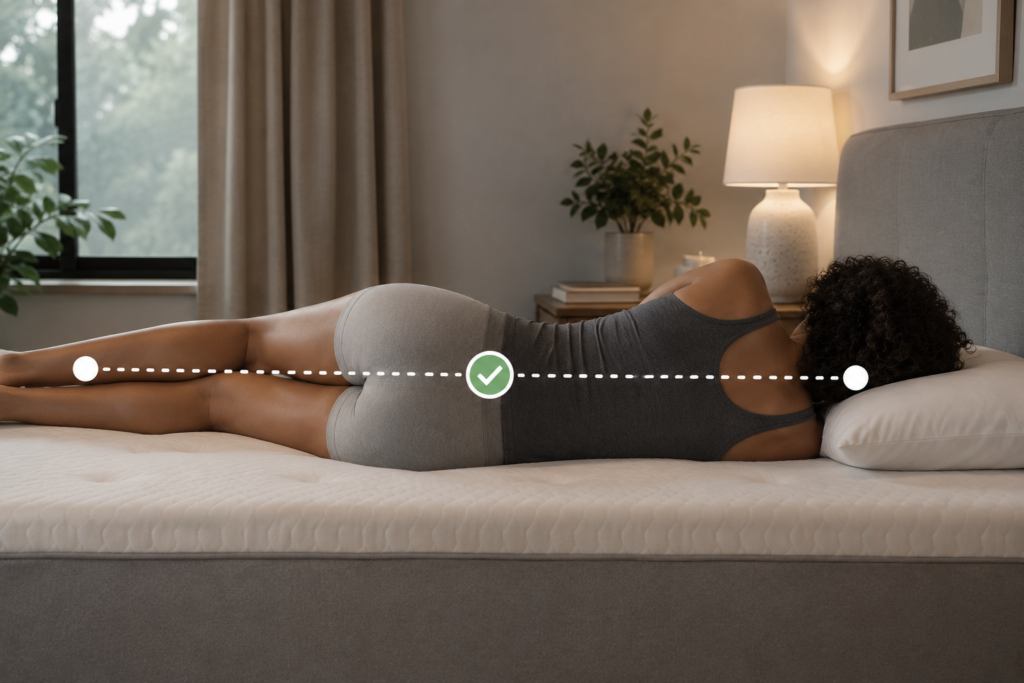
Why Spinal Alignment Matters
One of the most important jobs of a mattress is to support your spine in a comfortable, neutral position while you sleep. Your spine has natural curves that should be maintained throughout the night. If a mattress is too soft or too firm for your body, those curves can become less well supported, which may reduce comfort and affect the quality of your sleep.
Natural Curves
A supportive mattress helps your neck, shoulders, back and hips rest in a naturally aligned position.
Even Weight Distribution
Spreading your weight more evenly across the mattress can reduce concentrated pressure on key areas of the body.
Balanced Support
The right firmness should gently support your body without allowing excessive sinking or feeling uncomfortably rigid.
Comfort Throughout the Night
Good spinal support can help you stay comfortable, making it easier to settle into a restful night’s sleep.
Pressure Relief vs Support
One of the biggest misconceptions when buying a mattress is that support and pressure relief are the same thing. In reality, you need both. A mattress should support your spine while also cushioning the areas of your body that experience the most pressure during sleep.
| Pressure Relief | Support |
|---|---|
| Helps cushion pressure points such as your shoulders and hips. | Helps keep your spine comfortably aligned throughout the night. |
| Comes mainly from the comfort layers near the surface of the mattress. | Comes primarily from the mattress’s core support system. |
| Reduces discomfort caused by concentrated pressure on joints. | Prevents excessive sinking and helps maintain a neutral sleeping posture. |
| Too little pressure relief may leave you feeling sore or restless during the night. | Too little support may allow parts of your body to sink too deeply into the mattress. |
Land of Beds Expert Tip: If you’re shopping for a mattress because you’re waking up feeling stiff or uncomfortable, don’t assume that choosing the firmest mattress is the answer. The best mattress is one that supports your body in a comfortable, neutral position while providing enough pressure relief for your sleeping position and body weight. Taking the time to find the right balance is often more important than simply choosing a firmer feel.
When to Speak to Your GP
While a supportive mattress can improve comfort during sleep, it’s important to remember that persistent back pain can have many different causes. A mattress isn’t a medical treatment, and changing your mattress may not resolve an underlying health condition.
We recommend speaking to your GP or another qualified healthcare professional if you:
- wake with persistent back pain that continues for several weeks
- experience pain that regularly disrupts your sleep
- notice your symptoms are becoming worse rather than improving
- have concerns that your pain may be related to an underlying medical condition.
If your current mattress is old, worn or no longer supporting you comfortably, replacing it may improve your sleep environment. However, it’s always best to seek professional medical advice if you’re concerned about ongoing pain.
Mattress Firmness Myths: Fact vs Fiction
“A firmer mattress is always better for your back.”
Not necessarily. The best mattress is one that keeps your spine comfortably supported while providing enough pressure relief for your body weight and sleeping position. For some people that’s a medium mattress, while for others it could be softer or firmer.
“Memory foam mattresses are always soft.”
Memory foam can be made in a wide range of firmness levels. The material affects how the mattress feels by contouring around your body, but it doesn’t automatically make a mattress soft.
“A softer mattress can’t provide proper support.”
Support comes from the mattress’s overall construction, not simply its firmness. A well-designed softer mattress can provide excellent spinal support for the right sleeper.
“There’s one perfect mattress firmness for everyone.”
The right firmness depends on your sleeping position, body weight, preferred mattress materials and personal comfort preferences. There’s no single firmness that’s right for every sleeper.
Frequently Asked Questions
Is a firm mattress always better for your back?
No. A common misconception is that the firmer the mattress, the better it is for back pain. In reality, the best mattress is one that supports your spine in a comfortable, neutral position while providing enough pressure relief for your body weight and sleeping position. For some people this may be a medium mattress, while others may feel more comfortable on a softer or firmer option.
What mattress firmness is best for side sleepers?
Most side sleepers are comfortable on a softer mattress because it allows the shoulders and hips to sink into the comfort layers, helping to reduce pressure points. As a starting point, many side sleepers prefer a firmness between 1/6 and 2/6, although body weight and personal preference should also be considered.
What mattress firmness is best for couples?
If you and your partner have different sleeping styles or firmness preferences, a medium (3/6) or medium firm (4/6) mattress often provides a comfortable compromise. If there’s a significant difference in body weight, a hybrid mattress or one with excellent motion isolation may also be worth considering.
What’s the difference between mattress firmness and support?
Firmness describes how soft or firm a mattress feels when you first lie down. Support refers to how well the mattress keeps your spine aligned and distributes your body weight throughout the night. A softer mattress can still provide excellent support if it’s designed to do so.
Should I choose memory foam or pocket sprung?
It depends on the feel you prefer. Memory foam gently contours around your body for excellent pressure relief, while pocket sprung mattresses provide a more responsive and traditional feel. Both are available in a range of firmness ratings, so your choice should be based on comfort as well as support.
How do I know if I’ve chosen the wrong mattress firmness?
If you’re still waking up uncomfortable after allowing a few weeks to adjust to your new mattress, the firmness may not be right for you. A mattress that’s too soft may leave you feeling unsupported, while one that’s too firm can create pressure around your shoulders, hips or lower back. If you’re still unsure after the adjustment period, speak to your retailer about any available sleep trial or comfort guarantee.
Can a mattress become softer over time?
Yes. It’s completely normal for a new mattress to soften slightly as the comfort layers settle during the first few weeks of use. This is known as the break-in period and shouldn’t affect the mattress’s overall support or performance.
Continue Your Sleep Journey
Ready to learn more? Explore our expert buying guides or browse our mattress collections to help you find the perfect night’s sleep.
Expert Guide
Memory Foam Mattresses Explained
Discover how memory foam feels, who it’s best for and how it compares with other mattress types.
Read Guide →
Expert Guide
Pocket Sprung Mattresses Explained
Learn how pocket sprung mattresses work, how they feel and which sleepers they’re best suited to.
Read Guide →
Shop
Shop All Mattresses
Browse our complete collection of mattresses from the UK’s leading brands, available in every firmness level.
Shop Mattresses →
Shop
Browse Hybrid Mattresses
Discover hybrid mattresses that combine responsive support with exceptional comfort for a balanced night’s sleep.
Browse Range →

Written by Alice Littler
Alice brings a background in marketing, design, and branding to Land of Beds, where she focuses on making sleep advice simple, relatable, and practical for everyday life. She holds a degree in Graphic Design with a specialism in branding and design, giving her a strong understanding of how interior spaces, colour, layout, and environment can influence comfort, mood, and overall wellbeing.
Her creative background allows her to provide both expert bed and mattress guidance and bedroom design inspiration that helps customers create spaces that feel as good as they look.
Alongside her work in marketing and branding, Alice has collaborated with internationally recognised brands including Campari and Aperol, Paulaner, and Malfy, helping develop her expertise in consumer-focused communication and lifestyle content. She has also been trained by and works closely with leading UK bed and mattress manufacturers including Harrison Spinks, Hypnos, and Vispring, building extensive knowledge of mattress technology, sleep ergonomics, bedroom comfort, and sleep wellness.
Passionate about the life-changing impact of quality sleep, Alice creates content designed to help readers make informed decisions to improve their sleep environment, wellbeing, and everyday routine.