One of the questions we hear most often at Land of Beds sounds surprisingly simple.
“Are memory foam mattresses actually any good?”
It’s the sort of question that feels like it should have a straightforward answer, yet I’ve learnt that the best sleep advice rarely comes down to a simple yes or no.
So, while researching this guide, I sat down with two of our bed and mattress experts, Charlotte Binns and Maria Jones. Between them, they’ve spent years helping customers navigate one of the biggest purchases they’ll make for their home, so I wanted to compare my own experience with theirs and explore the questions people ask most often before choosing a memory foam mattress.
We talked about the misconceptions that refuse to disappear, why memory foam works brilliantly for some sleepers but not for others, and how today’s memory foam mattresses have evolved far beyond the products many people remember. Throughout this guide, I’ll share the insights that stood out most and help you decide whether memory foam is the right choice for the way you sleep.
What Is a Memory Foam Mattress?
Before we talked about pressure relief, cooling technologies or whether memory foam is actually worth buying, there was one question I wanted Charlotte to answer first. What exactly is memory foam?
It’s a material almost everyone has heard of, yet it’s still one of the most misunderstood in the mattress industry. Rather than starting with technical definitions, I asked Charlotte how she explains memory foam to customers when they first walk into one of our showrooms.
Her answer was refreshingly simple.
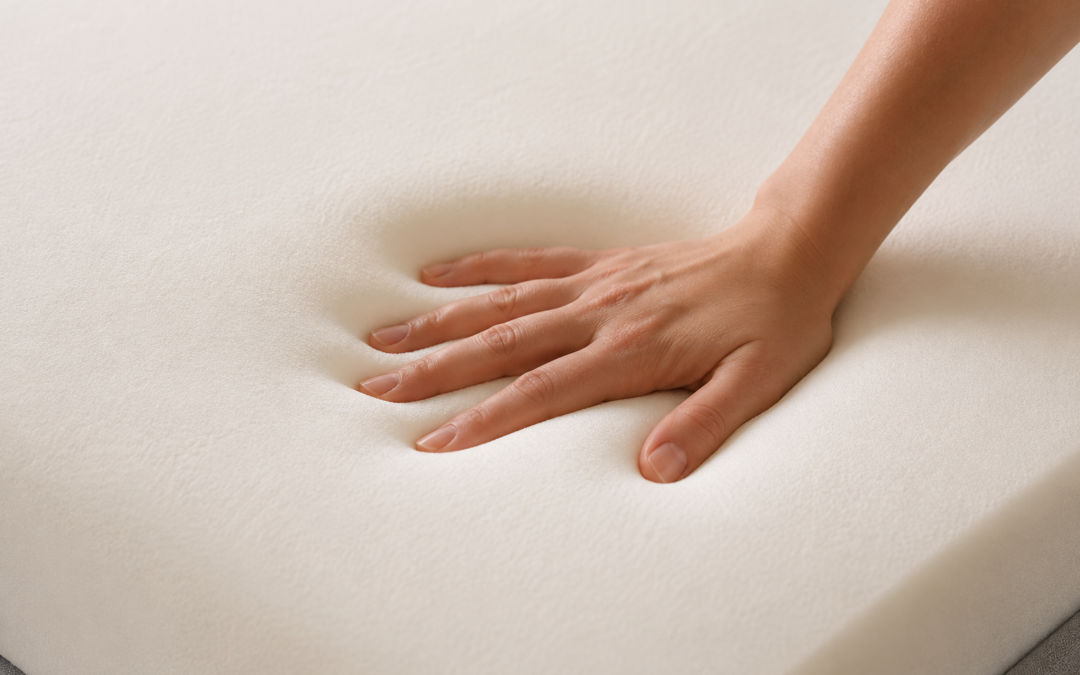
“People often think memory foam describes the whole mattress. In reality, it’s a comfort material that’s designed to respond to your body weight and body heat, gently contouring around your shape before returning to its original form when the pressure is removed.”
— Charlotte Binns, Bed & Mattress Expert
If you’d like to hear Charlotte explain it in her own words, the short video below brings this to life brilliantly. She talks through how memory foam responds to your body, why it feels so different from a traditional sprung mattress and clears up some of the biggest misconceptions we hear from customers every day.
In this short video, Charlotte explains how memory foam contours to your body, why it relieves pressure so effectively and why choosing the right mattress is always about finding the right fit for the way you sleep.
That distinction is more important than it might first seem. Memory foam doesn’t determine whether a mattress feels soft or firm. Instead, it influences how the mattress responds to your body, which is why two memory foam mattresses can feel completely different depending on their overall construction.
Maria built on that point by explaining that many shoppers are surprised to discover that today’s memory foam mattresses often combine viscoelastic foam with individually pocketed springs. That combination delivers the pressure relief memory foam is known for while adding the responsiveness, airflow and support of a sprung mattress.
Key takeaway
A memory foam mattress contains viscoelastic foam, a material that responds to body heat and pressure to contour around your body and distribute weight more evenly. While some mattresses are made entirely from memory foam, many modern designs combine memory foam with individually pocketed springs to create a hybrid mattress that balances pressure relief with responsive support.
Why Do So Many People Choose a Memory Foam Mattress?
Once we’d established what memory foam actually is, our conversation naturally moved on to something else. Despite the myths that still surround it, memory foam remains one of the most popular mattress materials in the UK. I wanted to understand why.
Interestingly, neither Charlotte nor Maria started talking about luxury, softness or expensive materials. Instead, they both came back to something much simpler: how a mattress feels after you’ve spent an entire night sleeping on it.
As Charlotte put it, “People don’t usually come back and tell us they love memory foam because it’s memory foam. They come back because they’re waking up with less pressure through their shoulders and hips, or because they’re no longer being disturbed every time their partner turns over.”
01 • Pressure Relief
Memory foam gently contours around your body, helping to spread weight more evenly across the mattress. This reduces pressure around areas such as the shoulders, hips and lower back, making it particularly popular with side sleepers and anyone looking for a more cushioned feel.
“The biggest difference most people notice is how much less pressure they feel through their shoulders and hips.”
— Charlotte Binns
02 • Motion Isolation
Unlike traditional spring systems, memory foam absorbs movement extremely well. If you share your bed, you’ll feel far less disturbance when your partner changes position or gets up during the night.
“Couples often tell us it’s the first uninterrupted night’s sleep they’ve had in years.”
— Maria Jones
03 • Personalised Comfort
Because memory foam reacts to your individual body shape, no two people experience it in exactly the same way. Rather than forcing your body into one sleeping position, the material adapts to you.
“That’s why two people can lie on the same mattress and both feel well supported.”
— Charlotte Binns
04 • Quiet, Undisturbed Sleep
Memory foam doesn’t contain springs within its comfort layer, so there’s no squeaking or creaking as you move. Combined with excellent motion isolation, it creates a calmer sleeping environment.
“It’s one of those benefits people rarely think about until they’ve experienced it.”
— Maria Jones
Looking back at our conversation, one thing became clear. People rarely choose a memory foam mattress because of the material itself. They choose it because it solves a problem, whether that’s relieving pressure, reducing partner disturbance or creating a more personalised sleeping surface. The material is simply the mechanism that delivers those benefits.
Who Is a Memory Foam Mattress Best For?
One thing Charlotte and Maria kept coming back to throughout our conversation was that there isn’t a universally “best” mattress. The right choice depends entirely on how you sleep, what feels comfortable to you and the support your body needs.
Charlotte explained that one of the biggest misconceptions she hears in the showroom is that memory foam is designed for everyone. “It’s a brilliant material,” she said, “but it’s brilliant for the right reasons. The people who love it tend to have similar priorities.”
Rather than thinking about age or budget, both experts suggested starting with how you sleep. That’s usually the best indicator of whether memory foam is likely to suit you.
Sleeper
Why memory foam works
Side sleepers
Excellent pressure relief around the shoulders and hips helps keep the spine comfortably aligned.
Couples
Outstanding motion isolation helps reduce disturbance when one partner moves during the night.
People with joint pain
The body-contouring properties of memory foam help reduce pressure on sensitive joints.
Light sleepers
Minimal movement transfer creates a quieter, less disruptive sleeping environment.
Anyone seeking pressure relief
Memory foam distributes body weight more evenly than many traditional comfort fillings.
Maria also made a point that I thought was worth highlighting. While side sleepers are often the first people we think of when discussing memory foam, they’re far from the only group who benefit from it. Couples, people recovering from injuries and anyone who finds themselves waking up with pressure through their shoulders, hips or lower back can all find memory foam noticeably more comfortable than a traditional sleeping surface.
When Might Memory Foam Not Be the Right Choice?
One thing I appreciated throughout my conversations with Charlotte and Maria was that neither of them tried to convince me memory foam is right for everyone. In fact, they were quick to point out that recommending the wrong mattress simply leads to disappointed customers. Sometimes, the best advice is to look at something else.
Charlotte explained that many of the questions they ask customers aren’t about the mattress at all. Instead, they’re about sleeping habits. Do you naturally sleep warm? Do you change position several times during the night? Do you prefer feeling supported on a mattress rather than gently cushioned in it? The answers to those questions often influence the recommendation more than the material itself.
Rather than thinking of these as disadvantages, I prefer to think of them as considerations. They’re the reasons another mattress type might suit your sleep style a little better.
You naturally sleep hot
Memory foam gently contours around your body, which some people describe as feeling warmer than a more open sleeping surface. If you’re a particularly hot sleeper, Charlotte suggested looking at hybrid mattresses with breathable comfort layers or mattresses containing natural fillings such as wool.
You change sleeping position frequently
Because memory foam responds to pressure, some sleepers find it slightly slower to move across than a more responsive spring mattress. If you regularly switch between your side, back and front during the night, a hybrid mattress may feel easier to move around on.
You prefer a traditional mattress feel
Not everyone enjoys the body-contouring sensation that memory foam creates. If you prefer the feeling of sleeping on top of your mattress rather than being gently cradled by it, a pocket sprung mattress may be more comfortable.
You want maximum airflow
Modern memory foams have improved significantly, but if breathability is your number one priority, mattresses with natural fibres, latex or hybrid spring systems may offer greater airflow throughout the night.
Maria summed it up perfectly when we discussed choosing between different mattress types. “It’s never about deciding whether memory foam is good or bad,” she told me. “It’s about finding the mattress that matches the way you sleep. That’s why we always start with the customer before we start talking about products.”
Our conversations reinforced something we see every day at Land of Beds: the best mattress isn’t the one with the most features or the biggest marketing claims. It’s the one that complements the way you naturally sleep. For some people, that’s memory foam. For others, a hybrid or pocket sprung mattress will simply feel like a better fit.
How Does Memory Foam Compare to Other Mattress Types?
By this point in our conversation, we’d reached the question almost every customer eventually asks. If memory foam isn’t automatically the right choice for everyone, what are the alternatives?
Charlotte smiled because, as she explained, this is often where a showroom conversation changes direction. Someone might arrive convinced they want a memory foam mattress, but after talking about how they sleep, they leave with a hybrid or pocket sprung mattress instead. Equally, someone who has always slept on springs may discover that memory foam offers exactly the pressure relief they’ve been missing.
The most important lesson from our discussion was that choosing a mattress isn’t about deciding which material is “best”. It’s about understanding what each one does well and matching it to the way you sleep.
Feature
Memory Foam
Hybrid
Pocket Sprung
Natural Fillings
How it feels
Body-contouring with a gentle “hug”
Balanced comfort with responsive support
Traditional, springy and responsive
Soft, breathable and naturally buoyant
Pressure relief
★★★★★ Excellent
★★★★★ Excellent
★★★☆☆ Good
★★★★☆ Very good
Motion isolation
★★★★★ Excellent
★★★★☆ Very good
★★★☆☆ Good
★★★★☆ Very good
Temperature regulation
★★★☆☆ Good
★★★★★ Excellent
★★★★☆ Very good
★★★★★ Excellent
Ease of movement
★★★☆☆ Moderate
★★★★★ Excellent
★★★★★ Excellent
★★★★★ Excellent
Best suited to
Side sleepers, couples and anyone looking for excellent pressure relief.
Combination sleepers wanting pressure relief with added bounce and airflow.
People who enjoy a traditional mattress feel with responsive support.
Hot sleepers and anyone looking for breathable, naturally sourced comfort.
May not suit
People who sleep very warm or frequently change position.
Those looking for a lower-priced mattress.
Sleepers wanting deep body contouring and maximum pressure relief.
People who prefer a pronounced body-hugging feel.
One thing that genuinely surprised me while researching this guide was that Charlotte and Maria rarely spoke about mattress materials in isolation. Instead, they always started by asking questions about the customer.
They weren’t trying to decide whether someone should buy memory foam, pocket springs or a hybrid mattress. They wanted to understand how that person slept, what they liked about their current mattress and, perhaps most importantly, what they wished was different. Once those answers became clear, the right mattress material usually followed naturally.
Perhaps the biggest takeaway from my conversations with Charlotte and Maria is that there isn’t a universally “best” mattress material. Memory foam, hybrid, pocket sprung and natural mattresses all excel in different areas. The best choice isn’t the one with the highest star rating or the biggest marketing claim, it’s the one that solves the problem you’re trying to fix and helps you wake up feeling better each morning.
Our Bed & Mattress Experts’ Recommended Memory Foam Mattresses
By the end of our conversation, there was one question I still hadn’t asked. If someone walked into a Land of Beds showroom tomorrow looking specifically for a memory foam mattress, which models would Charlotte and Maria confidently recommend?
Interestingly, neither of them chose the most expensive mattress in the showroom. Instead, they talked about matching different mattresses to different types of sleeper, something that’s become a recurring theme throughout this guide. A mattress that’s perfect for one person may be completely wrong for someone else.
With that in mind, these are the memory foam mattresses we’d recommend depending on how you sleep.
Editor’s Choice
Relyon Tarporley
If you’re looking for one mattress that comfortably suits the widest range of sleepers, this is the model Charlotte returned to several times during our conversations. By combining individually pocketed springs with pressure-relieving memory foam, the Relyon Tarporley strikes an excellent balance between comfort, support and responsiveness. It offers the contouring feel people expect from memory foam without the deeper sink-in sensation that doesn’t suit everyone, making it an excellent all-round choice for couples, combination sleepers and anyone buying a new mattress without knowing exactly what they’ll prefer.
“When someone tells me they like the idea of memory foam but they’re worried about feeling stuck in the mattress, this is often one of the first mattresses I’d recommend. It gives you that lovely pressure relief while still feeling supportive and easy to move around on.”
— Charlotte Binns
After everything Charlotte, Maria and I discussed, this is the mattress that best reflects the biggest lesson I took away from writing this guide: memory foam doesn’t have to mean compromising on support or responsiveness. The Relyon Tarporley feels reassuringly balanced, making it the recommendation I’d feel most confident giving to someone who’s intrigued by memory foam but isn’t quite sure where to begin.
Best for Pressure Relief
Dormeo Sereno
If there’s one mattress that demonstrates why memory foam has remained so popular, it’s the Dormeo Sereno. Designed to gently contour around your body while helping to relieve pressure through the shoulders, hips and lower back, it’s particularly well suited to side sleepers or anyone who regularly wakes up feeling stiff or uncomfortable. Throughout our conversation, Charlotte and Maria kept coming back to the importance of pressure relief rather than simply softness, and this mattress is a great example of that difference in practice.
“People often assume they need a softer mattress when they’re waking up with aches and pains. More often than not, what they’re really looking for is better pressure relief, and that’s where a mattress like the Dormeo Sereno really comes into its own.”
— Maria Jones
Best for: Side sleepers • Pressure relief • Couples looking for reduced motion transfer
Alice’s note
This is the mattress I’d point readers towards if they’ve read this guide and realised that pressure relief is their biggest priority. It’s a great example of how modern memory foam can provide that signature body-contouring comfort without feeling overwhelming, making it an excellent introduction to the material.
Best Value
Viva Supreme Memory Foam
One thing Charlotte and Maria were both keen to point out is that finding the right mattress isn’t about spending the most money. If you’re looking for a high-quality memory foam mattress that offers excellent comfort without stretching your budget unnecessarily, the Viva Supreme stands out as an exceptional choice. It delivers the body-contouring feel memory foam is known for, along with reliable support and pressure relief, making it an ideal option for anyone upgrading from an older spring mattress for the first time.
“A lot of customers are surprised by how much mattress they get for the price. It’s one of those products that consistently exceeds expectations once people actually try it.”
— Charlotte Binns
Best for: Excellent value • First-time memory foam buyers • Everyday comfort • Guest bedrooms
Alice’s note
If you’ve read this guide and decided that memory foam sounds right for the way you sleep, but you’re conscious of getting the best value for your money, this is where I’d start. It proves you don’t have to buy the most expensive mattress to experience the pressure-relieving comfort that memory foam is known for.
Best Premium Choice
Sealy Webber
If you’re investing in your sleep for the long term, the Sealy Webber is one of the mattresses both Charlotte and Maria spoke highly of. It combines Sealy’s renowned support system with premium comfort layers, including memory foam, to create a mattress that feels supportive, responsive and exceptionally well balanced. Rather than delivering the deep “sink-in” sensation some people associate with memory foam, it offers a more refined feel that balances pressure relief with stability, making it an excellent choice for a wide range of sleeping styles.
“People often assume premium mattresses are all about extra layers or luxury finishes. What they’re really paying for is how consistently the mattress supports them night after night. That’s where you notice the difference.”
— Charlotte Binns
Best for: Long-term investment • Couples • Combination sleepers • Premium comfort and support
Alice’s Note
One thing I’ve taken away from writing this guide is that a premium mattress isn’t necessarily about having the most features. It’s about how those features work together. The Sealy Webber is a great example of that philosophy, combining supportive pocket springs with pressure-relieving memory foam to create a mattress that feels reassuringly balanced rather than overly soft or overly firm. If you’re looking for a mattress that will continue to perform well for years to come, this would be one of my first recommendations.
Five Things I Took Away from My Conversations with Our Bed & Mattress Experts
Before I wrapped up my notes, I looked back over everything Charlotte, Maria and I had discussed. Although we’d spent hours talking about memory foam, the biggest lessons weren’t really about memory foam at all. They were about understanding how people sleep and why choosing the right mattress is rarely as simple as choosing the most popular one.
01. Memory foam isn’t defined by softness.
This came up again and again. Memory foam describes how a mattress responds to your body, not how firm it feels. Two memory foam mattresses can feel completely different depending on the support system and comfort layers used.
02. The best mattress solves a problem.
Whether someone wanted better pressure relief, less movement from their partner or more support for their back, Charlotte and Maria always started with the customer’s reason for changing their mattress rather than the product itself.
03. Modern memory foam has moved on.
Many people still picture the memory foam mattresses they tried years ago. Today’s designs often combine memory foam with individually pocketed springs, improved airflow and more responsive support, making them feel very different from earlier generations.
04. There isn’t one perfect mattress.
This was probably the biggest takeaway of all. Throughout our conversations, neither Charlotte nor Maria ever described one mattress as being “the best”. Every recommendation depended on the person, their sleeping position, comfort preferences and what they wanted to improve.
05. Choosing a mattress should feel reassuring, not overwhelming.
If there’s one thing I’ll take into future buying guides, it’s that expertise isn’t about making mattresses sound more complicated. It’s about helping people feel confident that they’re choosing the right one for the way they sleep.
So, Is a Memory Foam Mattress Right for You?
After spending time with Charlotte and Maria, one thing became incredibly clear. Memory foam isn’t a miracle material, nor is it the wrong choice for everyone. Like every mattress type, it has strengths, considerations and the people it’s best suited to. The key isn’t deciding whether memory foam is “good” or “bad”. It’s deciding whether it’s the right fit for the way you sleep.
If you’re looking for outstanding pressure relief, excellent motion isolation and a mattress that gently contours around your body, memory foam could be exactly what you’ve been searching for. If you naturally sleep warm or prefer a more traditional, responsive feel, one of our hybrid or pocket sprung mattresses may be a better match instead.
If you’re still unsure, that’s completely normal. Choosing a mattress is a significant investment, and it’s worth taking the time to compare your options. Whether you’re shopping online or visiting one of our Helsby or Wigan showrooms, our sleep experts are always happy to talk through how you sleep, explain the differences between mattress types and help you find the one that’s right for you.
Explore Memory Foam Mattresses
Browse our collection of memory foam and hybrid mattresses from trusted brands.
Alice brings a background in marketing, design, and branding to Land of Beds, where she focuses on making sleep advice simple, relatable, and practical for everyday life. She holds a degree in Graphic Design with a specialism in branding and design, giving her a strong understanding of how interior spaces, colour, layout, and environment can influence comfort, mood, and overall wellbeing.
Her creative background allows her to provide both expert bed and mattress guidance and bedroom design inspiration that helps customers create spaces that feel as good as they look.
Alongside her work in marketing and branding, Alice has collaborated with internationally recognised brands including Campari and Aperol, Paulaner, and Malfy, helping develop her expertise in consumer-focused communication and lifestyle content. She has also been trained by and works closely with leading UK bed and mattress manufacturers including Harrison Spinks, Hypnos, and Vispring, building extensive knowledge of mattress technology, sleep ergonomics, bedroom comfort, and sleep wellness.
Passionate about the life-changing impact of quality sleep, Alice creates content designed to help readers make informed decisions to improve their sleep environment, wellbeing, and everyday routine.