
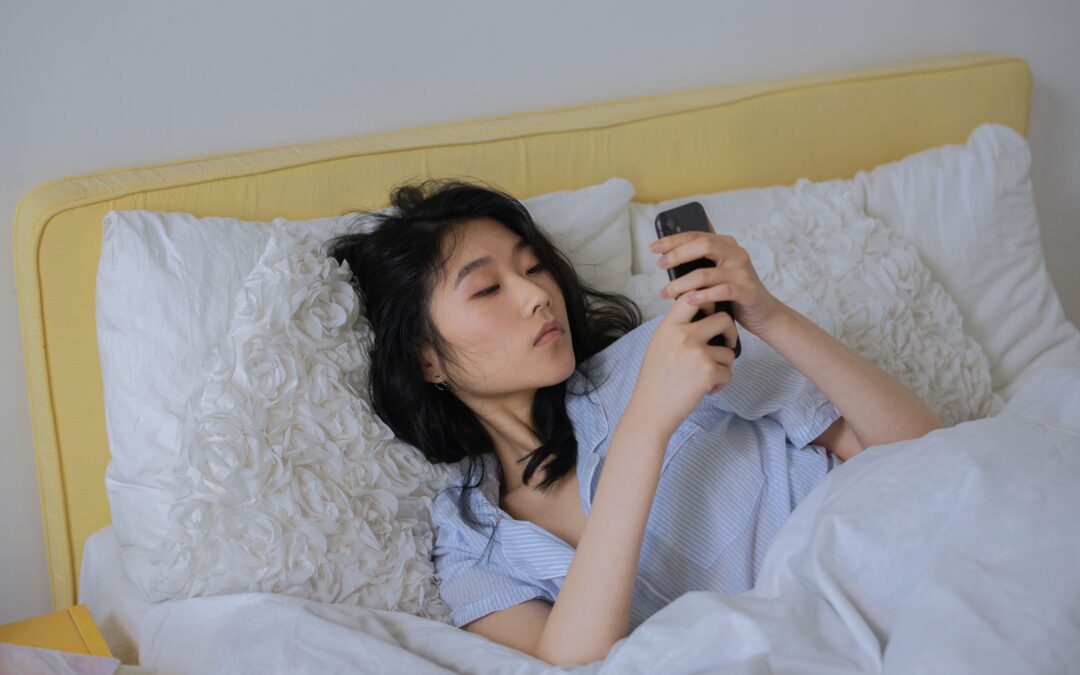
Insights from Dr Katrina O’Donnell, Retired GP & Sleep Health Advisor
Sleep has become one of TikTok’s biggest wellness obsessions. #Sleep has over 5.3 million posts, with a further 31 million hashtags on Instagram. As a result, millions of people are trying everything, from sleepy girl mocktails to weighted blankets and coloured noise, in the hope of finally getting a good night’s sleep. And, most are doing it without knowing whether any of it actually works. As a result, we put SleepTok’s biggest trends to Dr Katrina O’Donnell, a retired GP with three decades of clinical experience, to find out which ones hold up.
Why SleepTok Has Taken Off
It’s worth saying upfront how ordinary this problem actually is. The NHS advises adults to get seven to nine hours of sleep a night, and yet around one in three people in the UK are thought to experience insomnia at some point.
Meanwhile, The Sleep Charity puts the number living with an undiagnosed sleep disorder at more than 14 million. Against that backdrop, it’s not surprising that so many of us have gone looking for answers on TikTok, rather than waiting weeks for a GP appointment.
Why People Turn to TikTok for Sleep Advice
The British Medical Journal has made the same point: TikTok now sits within the wider health-advice ecosystem, precisely because it’s immediate, relatable and accessible, in a way the traditional route to medical advice often isn’t. With so many individuals impacted, this isn’t a niche wellness topic, it’s an ordinary problem that TikTok has simply made more visible, and more shareable.
Getting a same-week GP appointment for something non-urgent is hard. However, finding someone on TikTok who’ll answer your exact question in thirty seconds isn’t.
Dr Katrina O’Donnell’s Perspective
“It’s not hard to understand. Healthcare is stretched, appointments are short, and if you’re in your twenties and not sleeping well, waiting three weeks for a five-ten-minute GP appointment doesn’t feel like an appealing option. Someone on TikTok who seems warm and relatable (and is clearly sleeping fine) will answer your question immediately. The appeal is obvious.”
Dr Katrina O’Donnell
Retired GP & Sleep Health Advisor
Dr O’Donnell’s view of sleepfluencers themselves is more generous than you’d expect. Some are doing proper research and making sleep health feel accessible rather than clinical, which she thinks is broadly a good thing. After all, anything that gets people treating sleep as a serious health behaviour, rather than something that just happens is beneficial. Her concern is what sits next to that content.
Dr O’Donnell’s Perspective
“Unfortunately, a lot of sleepfluencer content is commercially driven or oversimplified in ways that cause harm. For example, the sleepmaxxing content that pushes people to obsess over biometric data worries me. The supplement market has latched onto sleep in a big way, and most of those claims don’t stand up. And, there’s content that actively discourages people from seeking medical help because the creator found a natural fix that worked for them.”
Dr Katrina O’Donnell
Retired GP & Sleep Health Advisor
She recommends that individuals use those platforms as a starting point rather than as an endpoint.
Sleepmaxxing: Healthy Habit Or Harmful Obsession?
In O’Donnell’s eyes, sleepmaxxing mixes some of the best sleep advice around with one of the internet’s worst habits, obsessing over getting it perfect.
“Sleepmaxxing is one of those trends where you’ve got genuinely good advice sitting right next to stuff that’ll make things worse if you take it seriously. The habits that are actually backed by evidence? Consistent wake times every day (including weekends), morning daylight exposure, a cool bedroom, and cutting screen time before bed. None of that is new, instead, the science supporting these practices has just gotten stronger over time.”
Dr Katrina O’Donnell
Retired GP & Sleep Health Advisor
That lines up with NHS guidance almost exactly: a regular wake time, no caffeine after around 4pm, daylight during the day, and no screens in the hour before bed.
Where it turns darker is the obsessive edge. There’s a real, recognised phenomenon called orthosomnia, where fixating on your sleep tracker score starts to wreck the very sleep it’s meant to be measuring.
“If you’re lying awake worrying about whether your deep sleep percentage was high enough, you’ve already missed the point. The goal is good sleep, not a perfect graph.”
Dr Katrina O’Donnell
Retired GP & Sleep Health Advisor
The same trap catches out people trying too hard to fall asleep in general. The harder you chase it, Dr O’Donnell explains, the more alert your brain gets. This is because sleep isn’t something you force, rather, it’s something you allow. Once your bedroom becomes a place of performance anxiety, the problem grows. Her actual fixes are unglamorous and include slow breathing (in for four, hold for four, out for six to eight), a body scan starting at the feet, getting up after twenty minutes rather than lying there stewing in your thoughts, a room at 16-18°C , and covering the clock.
Most of sleepmaxxing is just well-known sleep hygiene with a new name. The habits are sound. It’s the scoreboard mentality that isn’t.
Sleep Syncing: Does Resetting Your Body Clock Actually Work?
Sleep syncing is the most well-intentioned trend, as it’s built around how your circadian rhythm actually functions.
“Your circadian rhythm is a biological clock which runs on roughly a 24-hour cycle and is mainly driven by light signals reaching your brain. It responds well to the right inputs. However, it takes time, and you can’t rush it.”
Dr Katrina O’Donnell
Retired GP & Sleep Health Advisor
The factor that matters most isn’t your bedtime, which is where most people focus. Instead, it’s your wake time.
“The single most powerful thing you can do is anchor your wake time. Pick a time and get up at that same time every day – regardless of how you slept. You should also get outside into daylight within the first hour of waking. That light signal is what resets the clock. Everything else, such as your sleep pressure and melatonin timing, adjusts around that anchor.”
Dr Katrina O’Donnell
Retired GP & Sleep Health Advisor
YouGov found that 71% of Britons already go to bed at roughly the same time every night. This means that most of us are halfway to sleep syncing without ever calling it that.
However, shifting your schedule – rather than just steadying it – takes longer than TikTok tends to suggest. Dr O’Donnell recommends moving in fifteen to thirty minute steps every few days, rather than trying to leap from a 2am bedtime to a 10pm one overnight.
Two smaller habits do most of the supporting work. Firstly, cutting caffeine by early afternoon, since it has a half-life of five to seven hours, meaning a 3pm coffee is still in your system at bedtime. Secondly, dimming screens in the evening, because your brain reads blue-rich light as daylight and suppresses melatonin accordingly.
White Noise, Pink Noise And Brown Noise: Which Is Best For Sleep?
The difference between the colours of noise comes down to physics (not anything mystical!) and each one has settled into its own niche online for good reason.
White Noise
White noise has equal energy across every frequency. It sounds harsh, like static or an untuned television, but works precisely because it masks everything, including sudden noises, a car outside, a partner shifting in bed, or anything that would otherwise wake you. It tends to suit people sleeping somewhere noisy, such as near a busy road or in a shared house.
Pink Noise
Pink noise softens the higher frequencies into something closer to rain or wind through leaves. It carries the most emerging research for sleep quality and memory consolidation, though the studies are still small. It’s also generally the gentler option for people who find white noise a bit abrasive to fall asleep to.
Brown Noise
Brown noise, sometimes called red noise, goes deeper still, and is more of a rumble than a hiss, meaning it resembles the sound of being below deck on a boat. It’s currently the trendiest of the three on TikTok, but has less sleep-specific evidence, especially than pink noise. It’s mostly favoured by people who simply find a lower, heavier sound easier to relax into.
However, none of them are secretly superior, nor will they make you sleepier on their own. What they all do is reduce the chance that outside noise wakes you up.
“All three forms of noise work primarily through auditory masking. They cover up sudden changes in your sound environment that would otherwise cause micro-awakenings. The one that best suits you is personal preference, so experiment with them and see.”
Dr Katrina O’Donnell
Retired GP & Sleep Health Advisor
This means that the honest answer to ‘which is best’ is whichever one you fall asleep to, or don’t notice yourself being annoyed by.
Magnesium Mocktails And The “Sleepy Girl” Routine: Are They Worth Trying?
Few trends have spread as fast as the sleepy girl mocktail. Ingredients include tart cherry juice, magnesium powder and sparkling water, sipped before bed. It’s also, refreshingly, one of the more scientifically plausible things on this list.
“As social media sleep trends go, this one is more grounded than most.”
The cherry juice earns its place, as it contains naturally occurring melatonin and tryptophan, a precursor to serotonin and melatonin. Some small studies have found modest improvements in sleep time and efficiency in adults with insomnia. The effect sizes aren’t dramatic and larger trials are needed, but the mechanism is biologically plausible.
The research behind Magnesium is murkier, which matches a systematic review from the National Library of Medicine finding the evidence genuinely mixed.
“Some small studies suggest supplementation may help sleep in people not getting optimal amounts from their diet. The evidence is mixed overall. The proposed mechanism, magnesium’s role in nervous system regulation and GABA activity, is credible. If you want to try it, magnesium glycinate is generally well tolerated by most individuals. However, anyone with kidney problems should check with their GP first.”
Dr Katrina O’Donnell
Retired GP & Sleep Health Advisor
As for the sparkling water, this makes the whole thing feel like a drink, rather than a supplement:
“The sparkling water doesn’t add anything biologically useful. That’s just how it’s served.”
Many skip the fact that the routine around the drink is likely doing more than the drink itself. A bedtime routine works on your brain by helping you learn to associate certain activities with sleep.
Consistency matters more than what you actually do or consume. Thirty to sixty minutes of winding down with lights dimmed and no screens, a warm bath (the temperature drop afterwards helps sleep onset), a book or some stretching will likely do more for you than the drink.

Weighted Blankets: Do They Actually Improve Sleep?
The theory behind weighted blankets is that deep pressure stimulation, essentially mimics the feeling of being held. The evidence for this is strongest in people with anxiety, autism or ADHD, and is still building for everyone else.
“There’s no real downside to trying one. A blanket that weighs about 10 percent of your body weight is the standard guidance.”
Dr Katrina O’Donnell
Retired GP & Sleep Health Advisor
However, don’t expect a weighted blanket to fix anything or everything on its own.
Can Your Mattress Actually Affect Your Sleep?
Amid all the noise about hacks and supplements, mattresses rarely get mentioned – Dr O’Donnell thinks that’s backwards.
“The wrong mattress can absolutely cause night wakings. It’s underappreciated because the effects are subtle. Discomfort that doesn’t fully wake you can still cause enough arousal to fragment your sleep, so you feel unrested without really knowing why.”
Dr Katrina O’Donnell
Retired GP & Sleep Health Advisor
Too firm of a mattress causes pressure at the hips and shoulders, particularly for side sleepers. Alternatively, too soft lets the hips sink and the lower back drop out of alignment, which tends to show up as morning back pain that eases through the day. Most mattresses last seven to ten years, and, if yours is approaching that age while your sleep has quietly got worse, it’s worth asking whether the two are connected.
On the other hand, pillows are the quieter culprit. Side sleepers generally need something firmer and higher, while back sleepers something thinner. Meanwhile, front sleepers, Dr O’Donnell says plainly, should really try to stop sleeping on their fronts.
Why Do So Many People Wake Up At 3am?
If you’ve ever woken at almost exactly the same time every night and wondered what’s wrong with you, the reassuring truth is: probably nothing.
“There’s a real biological reason for it. It’s not in people’s heads.”
Dr Katrina O’Donnell
Retired GP & Sleep Health Advisor
Sleep isn’t flat. Early in the night you’re mostly in deep, slow-wave sleep. By the earlier hours, the balance has tipped towards lighter REM sleep, which sits much closer to wakefulness. This is the main reason you’re more likely to properly surface at 3am than at midnight.
Cortisol, your alertness hormone, also quietly rises in the early hours as your body prepares for the day. For people who are already stressed, that rise can be sharper and tip lighter sleep into full wakefulness more easily.
There’s a hormonal piece that’s often missed too.
“Women in perimenopause and menopause often find this problem significantly worse. Falling oestrogen affects both sleep architecture and temperature regulation, which is why night sweats and early morning waking tend to appear together. It’s hormonal, not a sign of anxiety disorder, and it’s absolutely worth raising with your GP if it’s affecting your day.”
Dr Katrina O’Donnell
Retired GP & Sleep Health Advisor
What Actually Works For Better Sleep?
YouGov’s Sleep Study found 49% of Britons don’t think they get enough sleep, and 89% think more of it would improve their life. The good news is that the fixes are mostly the same handful of habits repeated throughout this piece, rather than twelve different things to juggle at once.
“Most people don’t need supplements or elaborate rituals. A regular routine, a dark and cool room, and no coffee after two in the afternoon will take you most of the way there.”
Dr Katrina O’Donnell
Retired GP & Sleep Health Advisor
If you take nothing else from any of this, it’s worth anchoring on the two habits Dr O’Donnell keeps coming back to: a consistent wake time, and morning daylight within the first hour of getting up.
Everything else, such as caffeine timing, screen use, room temperature, is genuinely useful, but those two do more of the actual work than people expect. This is because they’re what your circadian rhythm is actually responding to.
The season matters too, especially in British homes that are rarely built for either extreme. In hot weather, you should keep curtains closed by day to stop heat building up. Next, open windows once the outside air has cooled below room temperature, and shut them before sunrise to hold that cool air in. In cold weather, the same principle runs in reverse.
There is one piece of advice Dr O’Donnell has given more than any other, and it’s not glamorous at all.
“Cold feet delay sleep onset because the blood vessels in the extremities play a role in how your body redistributes heat. Wearing socks to bed has actually been studied, and found to help people fall asleep faster. I’ve recommended it to more patients than I can count, and their reaction is always the same.”
Dr Katrina O’Donnell
Retired GP & Sleep Health Advisor
When Should You Stop Trying Tiktok Hacks And Speak To A GP?
Every hack on this list has a limit.
“The general threshold to follow: if sleep has been significantly disrupted for more than three to four weeks and it’s affecting how you function during the day, you should see a professional. Daytime consequences are the key indicator. For example, if you’re experiencing difficulty concentrating, mood changes, reduced work performance, relying heavily on caffeine or feeling persistently low or anxious, it’s time to address it.”
Dr Katrina O’Donnell
Retired GP & Sleep Health Advisor
Alternatively, some symptoms shouldn’t wait even that long to be addressed. Loud snoring with gasping or choking, witnessed pauses in breathing, excessive daytime sleepiness out of proportion to hours slept, morning headaches, or waking with a fast or irregular heartbeat are immediate signs to see a doctor.
If you’ve tried all the basics and nothing has worked there’s a proper clinical answer worth asking for – by name.
“CBT-I, Cognitive Behavioural Therapy for Insomnia, is the NICE-recommended first-line treatment for chronic insomnia and it’s more effective than medication for most adults. Ask your GP about it specifically, because access varies.”
Dr Katrina O’Donnell
Retired GP & Sleep Health Advisor
Sleep apnoea deserves its own mention, mostly because it’s so often mistaken for something else. It’s underdiagnosed, carries real cardiovascular risks, and won’t be solved by supplements or social media hacks.
Which #Sleeptok Trends are Worth Trying?
Put it all together and a fairly clear picture forms. Sleep syncing and a consistent wake time sit on the firmest ground of anything trending.
The sleepy girl mocktail has real, if modest, plausibility behind the cherry juice, less behind the magnesium, and none at all behind the sparkling water.
Weighted blankets and coloured noise are low-risk and worth trying if they appeal to you. Sleepmaxxing is built upon a good premise, right up until it turns into checking your sleep score at 3am, at which point it’s doing more harm than the bad night ever would have.
The advice that keeps outperforming everything else isn’t new: wake up at the same time. Get outside in the morning. Keep your room cool and dark. Put the phone down – before you actually mean to. None of that fits in a fifteen-second video.
As Dr O’Donnell puts it, the platforms that got us all talking about sleep are still worth using, just not as the final word:
“Use those platforms as a starting point, not an endpoint.”
Dr Katrina O’Donnell
Retired GP & Sleep Health Advisor
While TikTok can offer plenty of inspiration, the basics still matter most. From creating a consistent sleep routine to finding the right sleep environment, small changes can make a meaningful difference.
Continue Exploring
Whether you’re looking for a new mattress or want to learn more about the science behind better sleep, explore our expert resources below.
Shop
Explore Our Mattresses
Find the right level of comfort and support with our extensive collection of mattresses, designed to help you enjoy a better night’s sleep.
Read
Visit Our Sleep Science Hub
Discover more expert guides, research and practical advice to help you understand your sleep and build healthier bedtime habits.
Written by Judith Ackers