
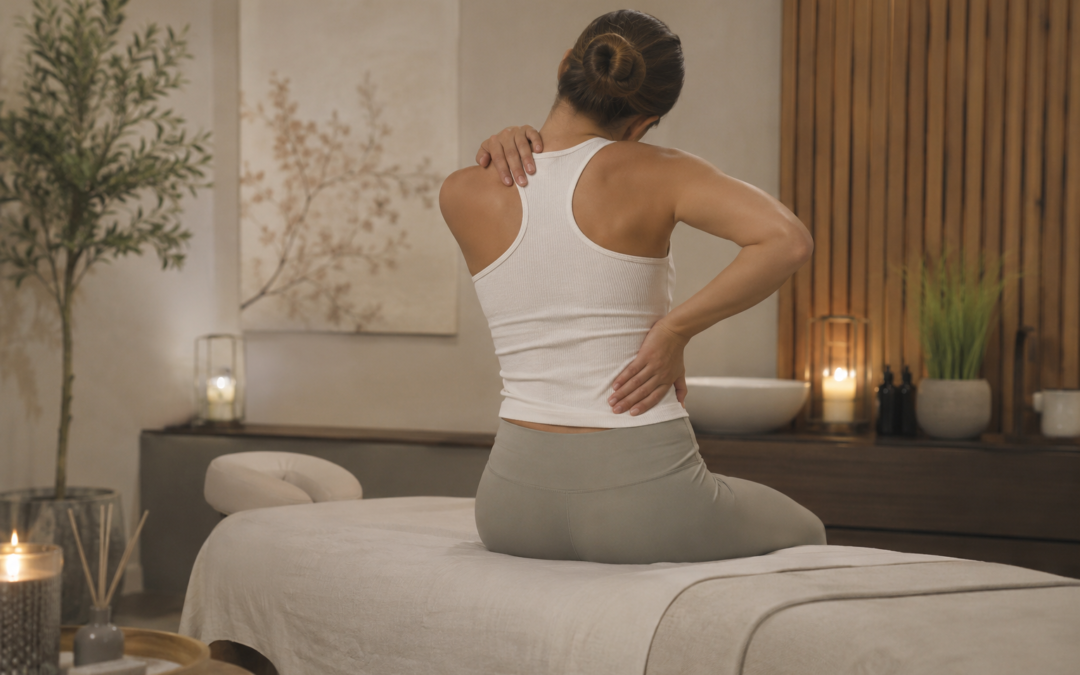
Back pain and poor sleep tend to go hand in hand. You sleep badly because your back hurts, your back hurts because you have not slept properly, and the mattress, which should be helping, often ends up making the whole thing worse. It is one of the most common conversations we have at Land of Beds, and one of the few that is usually very fixable once you know what to look for.
Before we get into specific mattresses, there is one thing worth saying upfront. Back pain is not one single problem. The best mattress for general lower back discomfort is not necessarily the right choice for something like a herniated disc, arthritis, or sciatica. This guide will walk you through what actually matters when choosing a mattress for back pain, and help you narrow down the right options for your body. But if you have a diagnosed condition, it is always worth speaking to your GP or physiotherapist before making a significant purchase.
In my clinical experience, patients who addressed their sleep surface as part of managing back pain consistently reported meaningful improvements. Firmness alone is not the answer. Spinal alignment, pressure distribution, and appropriate support for the individual’s weight and sleeping position are what matter.”
How your mattress affects your back pain and sleep quality
Your mattress is doing something to your spine every night. The question is whether it is supporting it properly or quietly working against it.
The spine has a natural S-shaped curve. It curves inward at the neck and lower back, and outward at the upper back. The role of a mattress is to support that shape in whatever position you sleep in, keeping the spine as close to neutral alignment as possible throughout the night. When that happens, the body is properly supported and the surrounding muscles are able to relax more fully. When it does not, those muscles can stay slightly engaged, compensating for the lack of support, which is often why people wake up feeling stiff rather than properly rested.
There are two common ways this tends to go wrong. The first is a mattress that is too soft. The heavier areas of the body, particularly the hips, sink too far into the mattress, and the spine drops out of alignment. The second is a mattress that is too firm for your body and sleeping position. Instead of supporting the body’s natural shape, it resists it, creating pressure at the shoulders and hips and, for side sleepers in particular, pushing the spine into a less natural position.
Both situations can contribute to ongoing discomfort over time, particularly if they are repeated night after night. The reassuring part is that this is usually very fixable once the mattress is properly matched to your body, your weight, and the way you sleep.
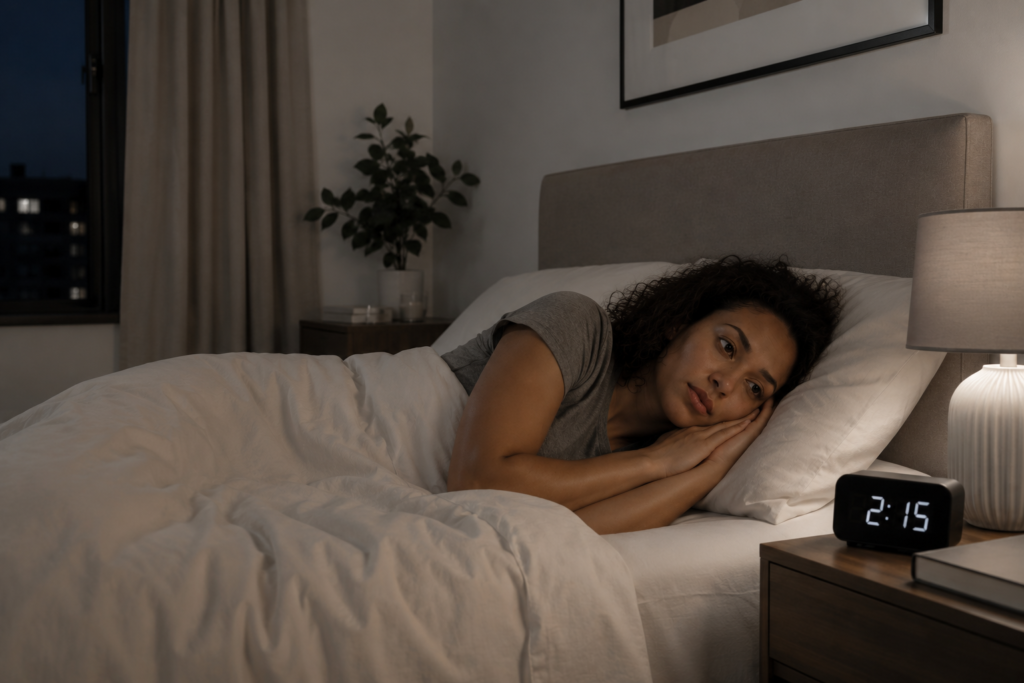
The biggest back pain mattress myth: why firm isn’t always the answer
Firm mattresses are often recommended for back pain. It is one of those pieces of advice that comes up again and again. The reality is a little more nuanced.
A very firm mattress can make back pain worse for some people. For side sleepers in particular, and the majority of UK adults do sleep on their side, a firm surface may not allow enough give at the shoulders and hips. Instead of supporting the body’s natural shape, it can push the spine slightly out of alignment through the night. That is not the kind of support people are usually looking for when trying to reduce discomfort.
What tends to matter more than firmness alone is how well the mattress supports your body in a neutral position. That will depend on your weight, your build, and the position you sleep in. Heavier sleepers and those who sleep on their back or front often benefit from a firmer feel. Lighter sleepers and side sleepers usually need a little more give, which is where medium or medium firm mattresses tend to work better.
There is no single “best” firmness for back pain. The right choice is the one that keeps your spine properly supported for your body, rather than following a general rule.
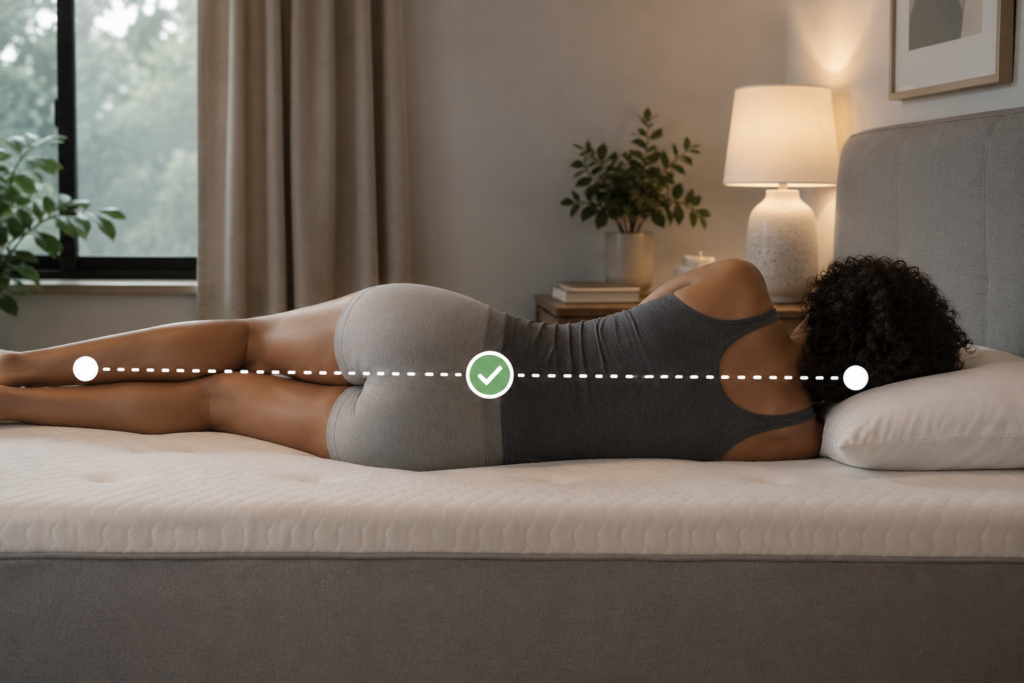
When you lie on a mattress, it can help to have someone look at your spine from behind. If your hips appear to sink noticeably below your shoulders, the mattress may be too soft. If your hips are pushed upwards and your body looks slightly arched, it may be too firm.
Ideally, your spine should appear relatively straight when viewed from behind, while maintaining its natural S-shaped curve when viewed from the side. That is what is meant by neutral alignment, and it is what a well-suited mattress is designed to support.
Mattress tension for back pain: the honest pros and cons of each
- Excellent pressure relief at the hips and shoulders, helping reduce concentrated pressure in side sleepers
- Contours closely to the body, supporting the natural curve of the lower back for lighter sleepers
- Allows muscles to relax more fully as pressure points are absorbed rather than resisted
- Heavier sleepers may sink too deeply, which can affect alignment over time
- Back and front sleepers often find the level of support insufficient for the lower back
- Softer mattresses may lose support more quickly if not well constructed
- Balances support and pressure relief across a wide range of body weights and sleeping positions
- Provides enough give for shoulders and hips in side sleeping while still supporting the lower back
- A reliable starting point if you are unsure which tension to choose
- May not provide enough support for heavier sleepers who need a firmer feel
- May not offer targeted support for more specific or persistent discomfort
- The balance of softness and support means it may not suit more specialised needs
- Provides stronger lumbar support for back sleepers while still allowing some give at the shoulders
- Often recommended as a balanced option for general lower back support
- Works well for a wide range of body weights without excessive sinkage or resistance
- Can create pressure at the shoulders and hips for lighter side sleepers
- May not feel supportive enough for very heavy sleepers who require a firmer surface
- Offers a high level of support, helping prevent excessive sinkage in heavier sleepers
- Helps keep the spine more level for back and front sleepers
- High quality firm mattresses tend to maintain their support well over time
- Orthopaedic designs often include additional focus on lower back support
- For side sleepers, a firmer surface can create pressure at the shoulders and hips
- Lighter sleepers may not compress the mattress enough to access the support layers fully
- Can feel uncomfortable at first and may take time to adjust to

The best sleeping positions for back pain and what each one needs from a mattress
Your sleeping position changes what your body needs from a mattress. Here’s how each one tends to behave in practice, along with a simple pillow adjustment that can make a noticeable difference.
What to look for in a mattress for back pain
Our top picks: the best mattresses for back pain at Land of Beds
These are mattresses we regularly recommend when back support is a priority. Each one is chosen for how it handles alignment, pressure distribution, and long-term support, not just because “orthopaedic” appears in the name.
| Pick | Best for | Key credential |
|---|---|---|
| Hypnos Ortho Gold | Extra firm orthopaedic support for back and front sleepers needing maximum alignment | ReActivePro pocket springs · British wool · Handcrafted in the UK · Orthopaedic tension |
| Harrison Spinks Ortho Deluxe | Premium natural orthopaedic support with excellent breathability and long-term durability | 5000 Revolution springs · Wool, hemp & cotton · Glue-free construction · Made in the UK |
| Relyon Natural Pocket Ortho Intense | Very firm, traditional orthopaedic support for those who need a genuinely rigid feel | High tension pocket springs · Natural fillings · Reinforced support structure |
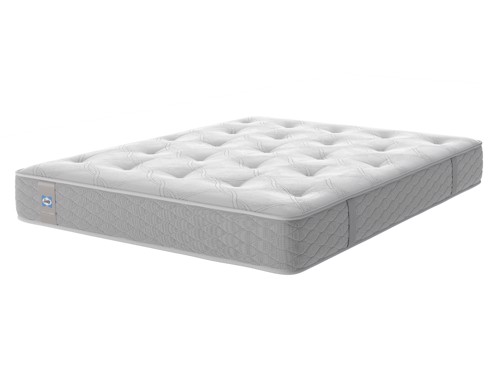
| Sealy Caldwell | Targeted back support with posture-focused spring technology | PostureTech spring system · Zoned support · Edge-to-edge stability |
| Emma Diamond Firm | Firm foam support with strong pressure relief for combination sleepers | Diamond degree foam · Zoned support layers · Temperature regulation |
| Sleepeezee Ortho Firm | Accessible firm orthopaedic support for consistent everyday use | Firm pocket spring unit · Durable construction · Reliable support level |

Back pain mattress FAQs: your most common questions answered

Written by Alice Littler
Alice brings a background in marketing, design, and branding to Land of Beds, where she focuses on making sleep advice simple, relatable, and practical for everyday life. She holds a degree in Graphic Design with a specialism in branding and design, giving her a strong understanding of how interior spaces, colour, layout, and environment can influence comfort, mood, and overall wellbeing.
Her creative background allows her to provide both expert bed and mattress guidance and bedroom design inspiration that helps customers create spaces that feel as good as they look.
Alongside her work in marketing and branding, Alice has collaborated with internationally recognised brands including Campari and Aperol, Paulaner, and Malfy, helping develop her expertise in consumer-focused communication and lifestyle content. She has also been trained by and works closely with leading UK bed and mattress manufacturers including Harrison Spinks, Hypnos, and Vispring, building extensive knowledge of mattress technology, sleep ergonomics, bedroom comfort, and sleep wellness.
Passionate about the life-changing impact of quality sleep, Alice creates content designed to help readers make informed decisions to improve their sleep environment, wellbeing, and everyday routine.