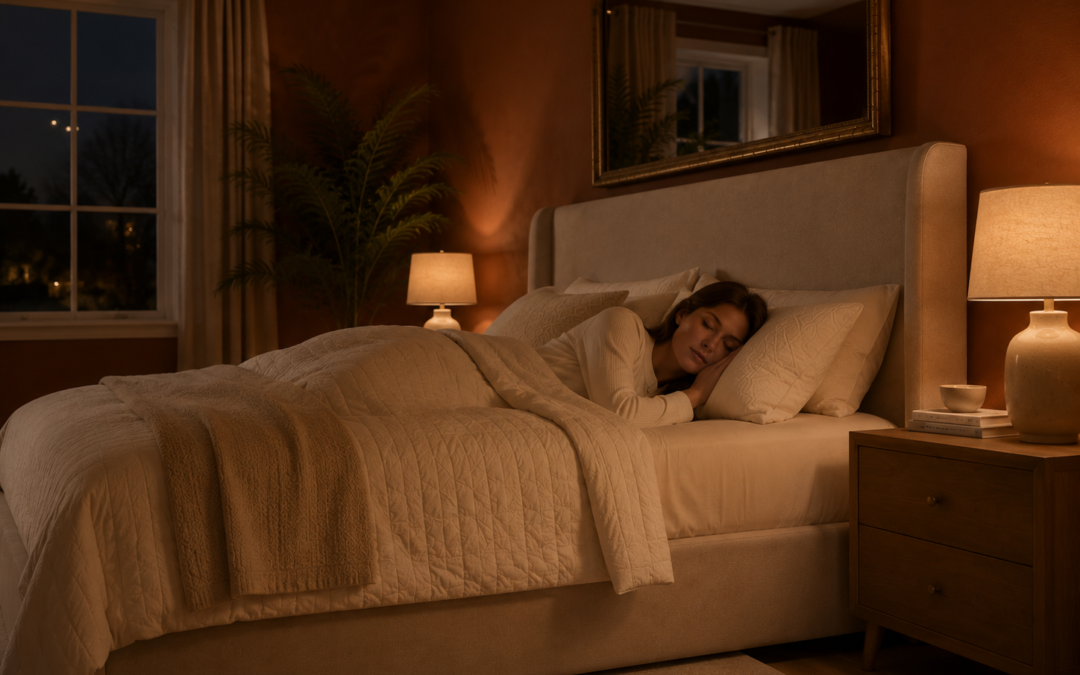
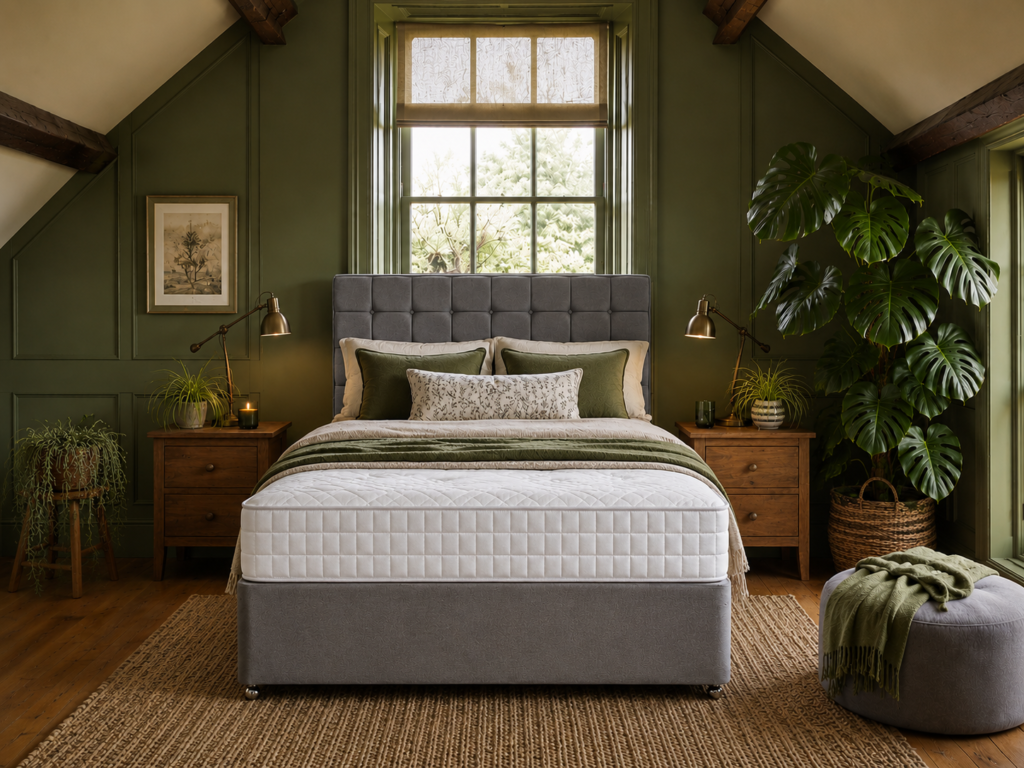
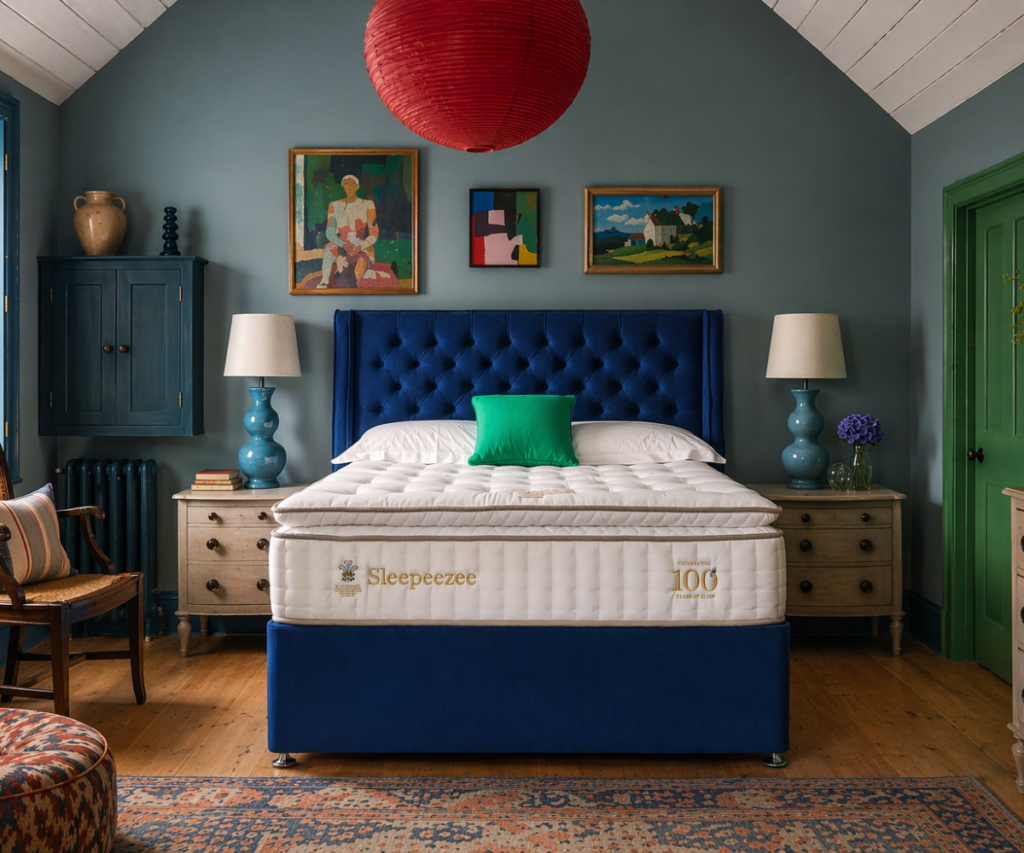
If you sleep on your side, the best mattress for you is one that relieves pressure at the shoulders and hips while keeping your spine properly supported. For most people, that means a medium or medium soft mattress with cushioning comfort layers that adapt to your shape.
It’s also the most common sleep position in the UK, and the one that’s easiest to get wrong. Sleep on your side on a mattress that’s too firm and you’ll feel it by morning: pressure through the shoulder, an ache at the hip, that slightly stiff feeling that takes a little while to ease off. Too soft, and you get the opposite problem, your body drops out of alignment and you never quite feel properly supported.
Get it right, though, and you won’t notice the mattress at all. That’s always the aim.
In this guide, we’ll walk through what actually makes a difference for side sleepers, which mattress types tend to work best in practice, and the options from our range at Land of Beds that we recommend most often based on real customer feedback and experience.
The quick answer
The best mattress for side sleepers is one that allows the shoulders and hips to sink in just enough to relieve pressure, while still keeping the rest of the body properly supported. For most people, that means a soft to medium firm tension with comfort layers that adapt to your shape, such as memory foam, gel-infused foam, or a well-designed hybrid.
The most common mistake is going too firm. If the mattress does not give at the shoulder and hip, those areas cannot settle in properly, and that is usually when pressure, stiffness, and disrupted sleep start to show up.
“Side sleeping places most of the body’s weight through two key contact points, the shoulder and the hip. If a mattress does not accommodate these areas properly, it can lead to sustained muscle tension and disrupted sleep, even if the person is not fully aware of it.
A mattress that allows the shoulder and hip to sink to the right depth while keeping the spine aligned can make a meaningful difference to overall sleep quality, rather than simply being a matter of comfort preference.”
KO
Dr Katrina O’Donnell
Medical reviewer, Land of Beds • 30+ years NHS experience
Why side sleeping puts specific demands on a mattress
Most mattress advice treats all sleeping positions the same, but side sleeping is very different, and it’s worth understanding why.
When you sleep on your side, your body weight is concentrated across a much smaller surface area than it would be on your back. The shoulder and hip become the main contact points with the mattress, while the space through the waist and between those points naturally sits slightly elevated.
For a side sleeper, a mattress needs to do two things at the same time. It needs to allow the shoulder and hip to sink in enough to relieve pressure, while still supporting the waist and lower back so the spine stays in a neutral position.
If it’s too soft, the hips drop too far and the spine curves downward. If it’s too firm, the shoulder and hip can’t settle in properly and the spine is pushed out of alignment in the opposite direction. The right mattress sits somewhere in between, and where that point is will depend largely on your body weight.
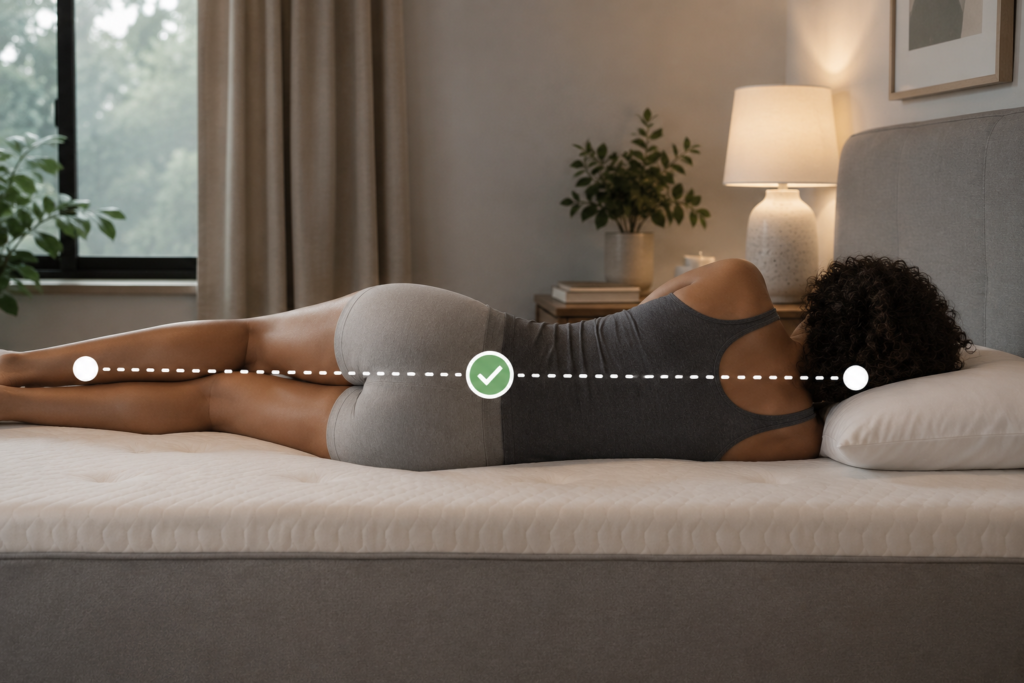
The neutral alignment test for side sleepers
Lie on your side and have someone look at your spine from behind. It should appear roughly straight, not dipping down into the mattress and not arching away from it.
If your hip is dropping below your shoulder line, the mattress is too soft. If your hip is being pushed up above your shoulder, it is too firm.
Spinal alignment is the benchmark here, not just comfort.
What side sleepers need, the four things that matter most
Pressure relief at the shoulder and hip
This is the starting point. The mattress needs to accommodate the shoulder and hip rather than resist them, allowing these heavier areas to settle into the surface so pressure is spread out rather than concentrated.
Memory foam and gel foam tend to do this particularly well, and pocket sprung mattresses with softer comfort layers can achieve a similar effect. Without this, side sleepers often notice pressure building at these points by morning.
Spinal alignment support
Pressure relief on its own is not enough. If the mattress is too soft underneath, the hips can sink too far and the spine drops out of alignment.
The mattress needs to support the body at the right depth, allowing the shoulder and hip to settle in while still supporting the waist and lower back. This is where hybrid constructions tend to work well, combining cushioning comfort layers with a more supportive base.
Motion isolation
Side sleepers tend to move position more frequently through the night, which makes motion transfer more noticeable if you share a bed.
A mattress that absorbs movement rather than transferring it helps reduce disruption. Pocket sprung and memory foam mattresses both perform well here, with memory foam offering the highest level of motion isolation.
Responsive enough to move easily
Most side sleepers shift position throughout the night, even if they stay broadly on their side. A mattress that is too slow to respond can feel restrictive when you try to move.
Materials like pocket springs, latex, or responsive hybrid constructions tend to offer a better balance, providing pressure relief while still allowing you to move comfortably.
What are the best mattress types for side sleepers?
Memory foam
Memory foam is one of the most consistently recommended options for side sleepers. It contours closely to the body, helping to absorb pressure at the shoulder and hip while supporting the areas in between.
Pros
✓ Excellent pressure relief at shoulders and hips
✓ Adapts closely to body shape
✓ Supports the waist and lower back effectively
✓ Ideal starting point for side sleepers
Cons
– Can retain heat
– Slower to respond when changing position
– Gel or graphite versions often needed for cooling
Hybrid (pocket springs and foam)
A hybrid combines the support of pocket springs with the pressure relief of foam or latex. For many side sleepers, this creates the most balanced overall feel.
Pros
✓ Strong balance of support and cushioning
✓ Better airflow than full memory foam
✓ Easier to move and reposition
✓ Often more durable long term
Cons
– Typically more expensive than foam-only options
– Feel varies depending on construction quality
Pocket sprung with soft comfort layers
A well-designed pocket sprung mattress can work very well for side sleepers, especially when paired with softer comfort layers that allow the body to settle naturally.
Pros
✓ Traditional feel with good support
✓ Can offer excellent pressure relief with the right fillings
✓ Available in natural material options
Cons
– Needs sufficient comfort layers to work well
– Firmer versions can feel too rigid for side sleepers
Latex
Latex offers pressure relief with a more responsive feel than memory foam. It adapts to the body while still allowing easier movement during the night.
Pros
✓ Responsive and easy to move on
✓ Naturally breathable and cooler
✓ Hypoallergenic and durable
Cons
– Higher price point
– Feel is not as instantly familiar as memory foam
What to avoid
Very firm mattresses are rarely a good match for side sleepers. Without enough give at the surface, the shoulder and hip cannot settle in properly, which leads to pressure building rather than being relieved.
How to choose the right tension for your body weight
Body weight makes a noticeable difference to how a mattress feels, particularly for side sleepers. The same mattress can feel soft to one person and firm to another, depending on how much the comfort layers compress under body weight.
In simple terms, a mattress only relieves pressure if your body weight is enough to engage the comfort layers. A lighter sleeper on a firmer mattress may not sink in far enough, so the surface feels harder than it should. A heavier sleeper on that same mattress may find it feels more comfortable because it compresses to the right depth.
Body weight
Recommended tension
Why
Under 9 stone (57kg)
Soft to soft-medium
Lighter sleepers need a surface that gives more easily at the shoulder and hip. A firmer mattress may not compress enough to provide pressure relief.
9–11 stone (57–70kg)
Soft-medium to medium
This range usually benefits from a balance of cushioning and support. There is enough give for pressure relief without excessive sinkage.
11–14 stone (70–89kg)
Medium to medium-firm
Average weight sleepers often find medium tension provides the right balance, allowing enough movement at the shoulder and hip while maintaining support.
14–16 stone (89–102kg)
Medium-firm
More body weight means the mattress compresses more easily. A slightly firmer surface helps maintain support while still allowing pressure relief.
Over 16 stone (102kg+)
Medium-firm to firm
Heavier sleepers may compress softer mattresses too much. A firmer tension helps prevent excessive sinkage while still providing enough give for side sleeping.
Our top picks: the best mattresses for side sleepers at Land of Beds
All of these are from our own range and chosen specifically for how well they perform for side sleepers. Each one suits a slightly different preference, so it’s less about which is “best” overall and more about which one is right for you.
Side sleepers wanting a high-end natural mattress with a responsive feel
Advanced pocket spring system with natural fillings and latex for breathable, responsive comfort
Hypnos • Royal Warrant holders • Handcrafted in the UK • Chemical-free cover
Hypnos Premier Deluxe Mattress
British wool pillowtop. Pocket spring support. Premium natural comfort designed with side sleepers in mind.
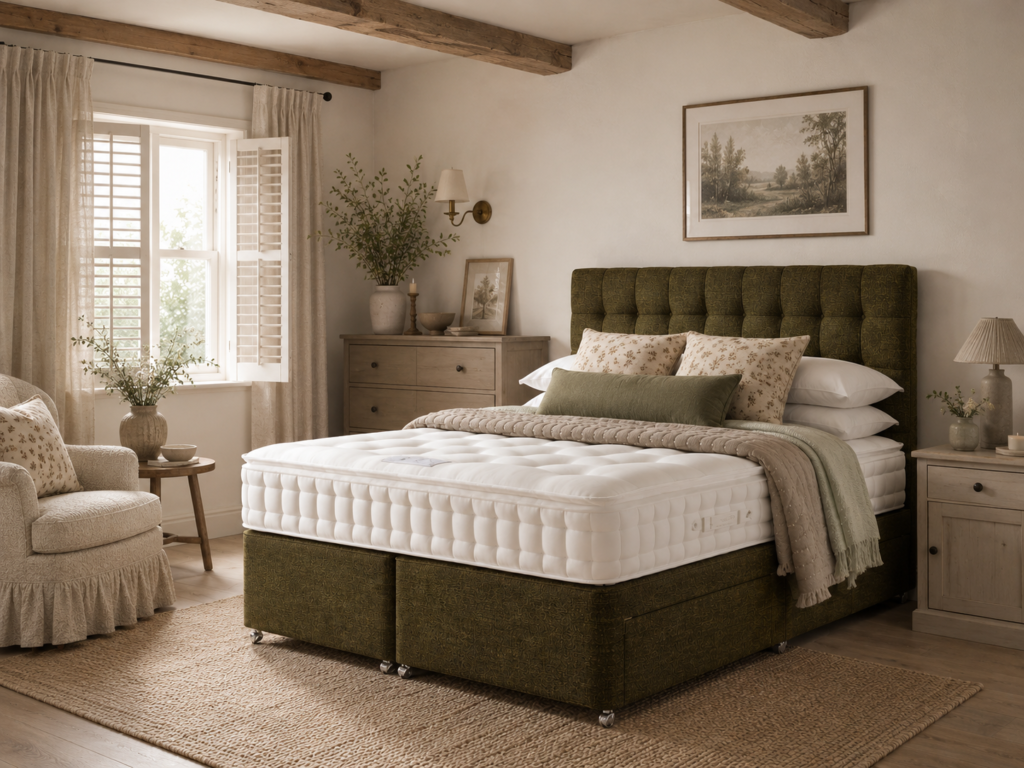
Hypnos are Royal Warrant holders who have been handcrafting mattresses in the UK for over a century, and the Premier Deluxe is one of their most well-suited options for side sleepers. The deep British wool pillowtop creates a soft, cushioned surface that allows the shoulder and hip to settle naturally, while still maintaining support through the rest of the body.
The pocket spring system responds to movement and weight distribution, helping the mattress adapt to your shape throughout the night. Natural materials like wool also help regulate temperature, keeping the surface comfortable in both warmer and cooler conditions.
“This is one of my favourite recommendations for side sleepers who want something that feels genuinely luxurious. The wool pillowtop gives you that softer, cushioned feel without losing support underneath, and it’s naturally breathable as well.”
Lucy Ackers
Bed and Mattress Expert, Land of Beds
Support
Pocket spring system designed to respond to body shape and movement
Fillings
British wool comfort layers for natural pressure relief and temperature regulation
Construction
Handcrafted design with natural, chemical-free cover and reinforced edges
Handcrafted in the UK • Natural materials • Medium tension available
Pocket spring support with memory foam comfort. A practical hybrid choice for side sleepers.
The Relyon Tarporley is a straightforward, well-balanced option for side sleepers who want both support and cushioning without moving into higher price points. The pocket spring base provides structure and stability, while the memory foam layer adds the pressure relief needed at the shoulder and hip.
It has a slightly firmer feel than some expect from a hybrid, which makes it a good choice if you still want that supportive base underneath. Features like reinforced edges help maximise the usable sleep surface, and the breathable design supports airflow throughout the night.
This is one to consider if you want a reliable, low-maintenance mattress that balances comfort and support, particularly if you prefer a slightly firmer overall feel.
Support
Individually pocketed springs designed to respond independently to movement and weight
Comfort
Memory foam layer for targeted pressure relief at the shoulders and hips
Construction
Reinforced edges, breathable design, and easy-care maintenance
Handmade in the UK • 10-year guarantee • Medium tension
Viva • Which? Best Buy • Made in the UK • 100-night trial
Viva Supreme Mattress
Graphite memory foam with pocket spring support. Designed to deliver pressure relief without overheating.
The Viva Supreme is a Which? Best Buy and a really strong option for side sleepers who like the feel of memory foam but are concerned about heat. The graphite-infused foam is designed to draw heat away from the body rather than retain it, helping maintain a more comfortable sleep temperature.
It still delivers the pressure relief memory foam is known for, particularly at the shoulder and hip, but feels more breathable and easier to live with night after night. Underneath, the pocket spring base provides the structure and support needed to keep the spine aligned.
This is a good choice if you want a modern, supportive mattress with strong pressure relief, but without the warmer feel that can come with traditional memory foam.
Support
Pocket spring system designed to provide independent support and stability
Foam
Graphite memory foam designed to improve airflow and reduce heat retention
Trial
60-night trial with UK manufacturing and recognised Which? Best Buy status
Which? Best Buy • Made in the UK • 60-night trial • Medium tension
Sleepeezee • Bed Product of the Year • Royal Warrant holders • 60-night trial
Sleepeezee Centurial 03 Mattress
Triple layer pocket springs with latex and natural fillings. A premium choice for side sleepers who want both cushioning and responsiveness.
The Centurial 03 sits right at the top end of the range, and it’s designed to deliver a more refined feel for side sleepers. The multi-layer pocket spring system works progressively, allowing the mattress to respond more precisely to different parts of the body, particularly at the shoulder and hip where pressure tends to build.
Natural fillings including latex, wool and alpaca create a surface that feels both cushioned and responsive. Latex adds a gentle bounce that makes it easier to move during the night, while the wool and alpaca help regulate temperature and wick away moisture.
It is a noticeably more luxurious feel overall, and one that tends to suit side sleepers who want pressure relief without the slower response of memory foam.
Support
Multi-layer pocket spring system designed to respond progressively to body weight
Fillings
Talalay latex, British wool and alpaca for responsive comfort and temperature control
Credentials
Bed Product of the Year, Royal Warrant holders, UK-made with a 60-night trial
Premium natural materials • UK handcrafted • 60-night trial • Medium tension available
The mattress does most of the work, but for side sleepers the pillow plays just as important a role in how comfortable you feel. It is what fills the gap between your head and the mattress and keeps your neck aligned with your spine.
If a pillow is too flat, your head drops towards the mattress and the neck comes under strain. Too thick, and the opposite happens, with the head pushed upward and out of alignment. The right pillow keeps your head level so your neck follows the same straight line your mattress is creating through the rest of your body.
The pillow between the knees
Placing a pillow between your knees is one of the simplest and most effective things a side sleeper can do. It helps keep the hips level, reduces the pull through the lower back, and can make a noticeable difference to overall comfort.
If you regularly wake up with hip or lower back discomfort, this is an easy place to start. It costs nothing and for many people it works almost immediately.
Frequently asked questions
What mattress firmness is best for side sleepers?
For most side sleepers, soft to medium firm works best, with the exact tension depending on body weight. Lighter sleepers, typically under 11 stone, often need a softer feel to allow enough give at the shoulder and hip. Average weight sleepers usually suit a medium tension, while heavier sleepers may prefer medium-firm to maintain support without losing pressure relief. Very firm mattresses are rarely a good match for side sleeping.
Is memory foam good for side sleepers?
Yes, memory foam is one of the most consistently recommended materials for side sleepers because of how well it relieves pressure at the shoulder and hip. The main consideration is heat. Traditional memory foam can feel warmer, so gel-infused or graphite-infused versions are often a better choice if you tend to sleep hot.
Can a firm mattress work for side sleepers?
In most cases, very firm mattresses create more problems than they solve for side sleepers. They tend to resist the shoulder and hip rather than allowing them to settle in, which can lead to pressure build-up and discomfort. Some heavier sleepers may prefer a slightly firmer feel, but there still needs to be enough cushioning on top to relieve pressure effectively.
What causes shoulder pain when sleeping on your side?
The most common cause is a mattress that does not allow enough give at the shoulder. Instead of absorbing pressure, the surface pushes back, which concentrates pressure in that area. A mattress with better pressure relief, such as memory foam or a softer pocket sprung design, can make a noticeable difference. Pillow height also plays a role, as it affects how the shoulder meets the mattress. If discomfort continues, it is worth speaking to a GP or physiotherapist.
Is a hybrid mattress good for side sleepers?
Yes, hybrids are often one of the most balanced options for side sleepers. The pocket spring base provides support that prevents the hips from sinking too far, while the comfort layers above help relieve pressure at the shoulder and hip. They also tend to sleep cooler than full memory foam and are easier to move on, which many side sleepers prefer.
Find your perfect side sleeper mattress at Land of Beds
Getting the tension, construction, and comfort layer right for side sleeping is a little more specific than it is for most other positions, and it’s exactly the kind of thing our team can help with.
If you tell us your body weight, how you sleep, and whether you tend to run warm, we can usually narrow it down very quickly and point you towards the options that are most likely to work for you.
Call us on 01928 242829, visit our showrooms in Greater Manchester and Cheshire, or browse our full range online.
Browse mattresses
Explore our full range of mattresses by size, tension and type. From memory foam to hybrid and natural options for side sleepers.
Alice brings a background in marketing, design, and branding to Land of Beds, where she focuses on making sleep advice simple, relatable, and practical for everyday life. She holds a degree in Graphic Design with a specialism in branding and design, giving her a strong understanding of how interior spaces, colour, layout, and environment can influence comfort, mood, and overall wellbeing.
Her creative background allows her to provide both expert bed and mattress guidance and bedroom design inspiration that helps customers create spaces that feel as good as they look.
Alongside her work in marketing and branding, Alice has collaborated with internationally recognised brands including Campari and Aperol, Paulaner, and Malfy, helping develop her expertise in consumer-focused communication and lifestyle content. She has also been trained by and works closely with leading UK bed and mattress manufacturers including Harrison Spinks, Hypnos, and Vispring, building extensive knowledge of mattress technology, sleep ergonomics, bedroom comfort, and sleep wellness.
Passionate about the life-changing impact of quality sleep, Alice creates content designed to help readers make informed decisions to improve their sleep environment, wellbeing, and everyday routine.